
Vehicle damage creates stress that extends far beyond the accident itself. Minnesota drivers navigate questions about repair quality, safety system restoration, and finding facilities they can trust. The stakes run higher than most people realize. Poor repairs can leave safety systems compromised, structural integrity weakened, and resale value diminished, even when the vehicle looks flawless on the surface.
At Falk Auto Body and Glass, Inc, transparency guides our approach to collision restoration. Founded in 1958 by Marvin Falk in Zumbrota, Minnesota, the Falk Auto Body business later expanded to Red Wing. Today, the Red Wing facility continues the family’s collision repair legacy, serving southeastern Minnesota with manufacturer-certified auto body repair services and transparent communication. This guide explains certification standards, warning indicators, and selection criteria that distinguish professional facilities from those that compromise quality.
Understanding What Makes a Shop Trustworthy
Choosing the right auto body repair shop protects both your family’s safety and your vehicle’s long-term value. The difference between a quality repair and a poor one isn’t always visible on the surface. A vehicle might look perfect after repairs, but still have safety systems that don’t work properly or structural damage that wasn’t fixed correctly.
Not all repair facilities operate with the same standards or capabilities. Some invest heavily in technician training, modern diagnostic equipment, and manufacturer-approved procedures. Others cut corners to complete work faster or cheaper. The challenge is identifying which category a shop falls into before you commit to repairs.
Certifications provide the first layer of verification, but understanding what those credentials actually mean and recognizing warning behaviors that suggest problems gives you the tools to make confident decisions about where your vehicle receives care.
Certification Standards for Professional Collision Facilities
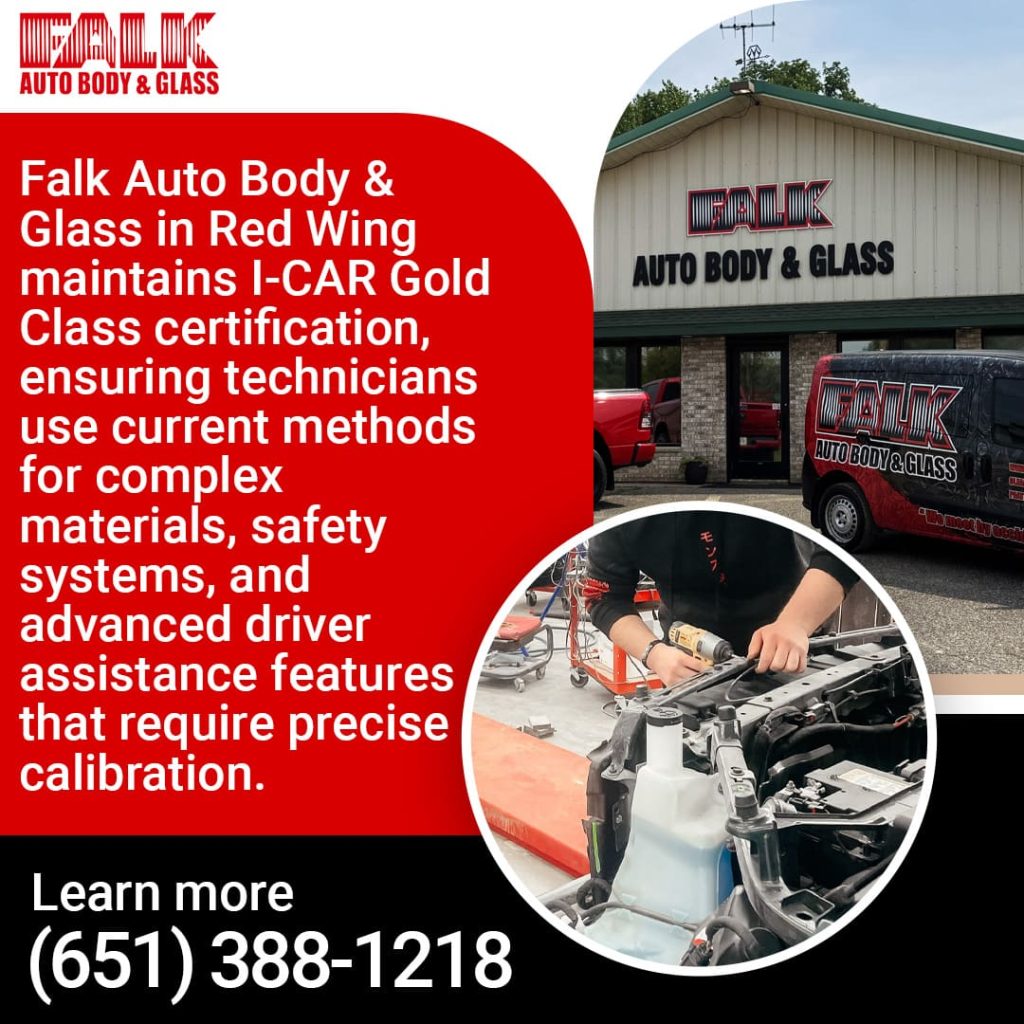
Professional facilities hold I-CAR Gold Class status and Original Equipment Manufacturer approvals that verify training on current repair methods. Certifications tell you whether a shop invests in proper training. It represents the real commitment to staying current with changing vehicle technology.
I-CAR Gold Class Recognition
The Inter-Industry Conference on Auto Collision Repair (I-CAR) trains collision repair professionals on the latest techniques. Gold Class is their highest recognition level. I-CAR Gold Class® is a widely recognized industry training standard that requires ongoing technician education on current repair methods. Less than one-quarter of collision shops nationwide hold this designation, underscoring a commitment to continuous training.
To earn it, every structural technician at the shop must complete current training. Half of all other staff, estimators, painters, and general technicians, must also maintain this training. Shops must also renew this status every year. As new vehicles come out with different materials and safety systems, technicians need updated training.
Manufacturer-Specific Certifications
Car manufacturers certify shops to repair their specific brands. These certifications mean the shop has the right equipment, training, and procedures for that manufacturer’s vehicles.
This matters more for newer vehicles. A 2022 Toyota Camry is built differently from a 2015 model. The newer car has more computer systems, different materials, and updated safety features. Manufacturer certifications verify the shop knows how to handle these differences correctly.
Warning Indicators When Selecting Auto Body Repair Services
Facilities lacking written estimates, employing pressure tactics, showing consistent negative review patterns, refusing procedure explanations, or declining warranty coverage demonstrate serious quality concerns. When searching for auto body repair near you, certain behaviors tell you a shop might not deliver quality work. Recognizing these signs before you sign anything protects you from problems later.
Absence of Detailed Written Documentation
A professional shop puts everything in writing. The estimate should list each repair step, specify which parts they’ll use (original manufacturer parts or aftermarket alternatives), and explain any additional services needed.
Shops that only give verbal estimates or say “we’ll figure it out as we go” leave you vulnerable to surprise charges. You need written documentation showing exactly what work will be done and what parts will be installed.
The estimate should also mention ADAS calibration if your vehicle has safety features like lane departure warnings or automatic braking. ADAS stands for Advanced Driver Assistance Systems, the electronic safety features in modern vehicles. Many repairs affect these systems, and they need recalibration to work properly.
High-Pressure Sales Techniques
Good facilities give you time to think. They answer your questions, explain the repair process, and let you get other estimates if you want.
Be careful if a shop says things like “your car is unsafe to drive” when you just drove it there, or “this discount expires today if you don’t sign now.” These pressure tactics push you into quick decisions without proper research.
Professional facilities understand that vehicle repairs represent major decisions. They respect your need to compare options and make informed choices.
Recurring Complaint Patterns
Every business gets a few negative reviews. What matters is seeing the same complaints repeatedly from different customers. Look for patterns in online reviews on Google and other platforms.
If multiple people mention poor communication, you’ll likely experience poor communication too. If several customers complain about missed deadlines or hidden charges, those probably aren’t isolated incidents.
Also, notice how auto body repair shops respond to complaints. Professional facilities acknowledge problems, explain what went wrong, and describe how they resolved the situation. Shops that argue with customers or make excuses in their responses often handle problems poorly in person, too.
Unwillingness to Explain Repair Methods
Quality facilities welcome your questions. Technicians should explain what damage they found, how they’ll fix it, and why certain procedures are necessary. They use simple language instead of technical jargon you can’t understand.
If shop staff become defensive when you ask about repair methods or parts choices, that’s a warning sign. If they won’t explain their timeline or rush you through the estimate, they might be hiding shortcuts that compromise safety.
Professional shops view customer education as part of good service. They want you to understand what’s being done to your vehicle.
Warranty Coverage Refusal
Reputable facilities guarantee their work in writing. The warranty should cover both labor and materials. Most quality shops offer warranties lasting as long as you own the vehicle, though terms vary.
Shops refusing to provide written warranties lack confidence in their repair quality. Verbal promises mean nothing if problems develop later. Always get warranty terms in writing before authorizing any work.
Minnesota Legal Protections for Vehicle Owners
Minnesota Statute 72B.092 prohibits insurers from limiting your freedom to choose your repair shop, requiring you to go to a particular facility (including insurer-controlled ‘drive-in’ centers), or using coercive tactics to influence where you repair your vehicle. Minnesota Statute 72A.201 further reinforces your right to choose a repair shop and specifies how insurers must notify you of your rights.
State Statute 72B.092 Requirements
Under Minnesota Statute 72B.092, insurers cannot specify the use of a specific parts vendor when adjusting your claim. This means they cannot force repairs with parts from a particular source, but insurers are generally only required to pay reasonable costs for parts of like kind and quality. If you prefer original manufacturer parts (OEM), discuss this with your insurer and ensure it’s specified in writing on your estimate, as any costs beyond standard coverage may be your responsibility.
This protection applies regardless of whether your insurer has “preferred” or “in-network” shop programs. You control the decision completely. The insurance company must pay for proper repairs, no matter which licensed shop you select.
Some insurance adjusters might suggest you’ll get faster service or easier paperwork at their preferred shops. While these benefits might be real, they don’t eliminate your right to choose based on certifications, reputation, and quality standards that matter to you.
Parts Selection Authority
Minnesota law also protects your right to choose parts quality. Insurance companies can only require aftermarket parts (non-original manufacturer parts) if you agree. They cannot mandate these as a condition of payment.
One exception exists for glass repairs. Insurers may require aftermarket windshields and windows. For all other parts, such as body panels, lights, bumpers, and structural components, you have the right to specify original manufacturer parts if you prefer them.
Understanding this right matters because original manufacturer parts often fit better, last longer, and maintain your vehicle’s warranty and resale value better than generic alternatives.
What to Verify Before Authorizing Repairs
Ask about certification currency, manufacturer procedure adherence, diagnostic equipment capabilities, parts sourcing policies, repair timelines, communication methods, and warranty terms before authorizing work. When evaluating auto body repair services, the right questions reveal whether a facility follows proper procedures and treats customers fairly.
Certification and Training Verification
Request to see current I-CAR Gold Class certificates and ask when technicians last completed manufacturer-specific training for your vehicle brand. Professional facilities provide this information immediately without hesitation. Vague responses or reluctance to show documentation suggest the shop may lack the technical expertise needed for modern vehicle repairs.
Repair Procedure Compliance
Confirm the shop will follow your vehicle manufacturer’s specified auto body repair procedures rather than generic methods. Each brand has unique requirements for structural repairs, welding techniques, and safety system restoration.
Ask to see their diagnostic scanning process and whether ADAS calibration happens on-site. Shops outsourcing these services add time and coordination challenges to your repair timeline.
Parts Quality Standards
Clarify whether the estimate includes original manufacturer parts or aftermarket alternatives. Request an honest explanation of how each option affects fit quality, warranty coverage, and long-term durability for your specific damage. If you prefer original parts, state this requirement clearly and verify it appears in writing on your estimate before signing the authorization.
Timeline and Update Protocols
Discuss realistic completion timeframes based on your vehicle’s damage severity and current parts availability. Professional shops provide honest timelines rather than overpromising to win your business.
Establish how the facility will communicate progress updates, unexpected discoveries, and any timeline changes. Regular text or email updates prevent frustration and help you plan transportation alternatives.
Modern Vehicle Repair Technology Requirements
Contemporary vehicles require specialized diagnostic equipment, material-specific repair tools, and calibration systems that didn’t exist five years ago for proper safety restoration. Today’s vehicles are fundamentally different from cars built even ten years ago. This creates new requirements for proper auto body repairs.
Safety System Calibration Complexity
Modern vehicles use cameras, radar, and sensors to provide safety features like automatic emergency braking and lane departure warnings. These systems need precise calibration to work correctly.
Even minor repairs can shift a sensor’s position by tiny amounts that prevent accurate operation. For example, replacing a windshield affects the camera mounted behind it. Repairing a bumper affects the radar sensors embedded in it. Without proper recalibration, these safety features might not activate when you need them.
Proper calibration requires specialized equipment and manufacturer-specific procedures. Shops without this capability either skip calibration (leaving your safety systems non-functional) or send your vehicle elsewhere (adding time and coordination to your repair).
Specialized Material Handling
Car manufacturers now build vehicles using multiple materials in the same structure. Your vehicle might have ultra-high-strength steel in some areas, aluminum in others, and composite materials elsewhere.
Each material requires different auto body repair techniques. Aluminum welding needs separate tools from steel welding to prevent contamination. High-strength steel requires specific heat control during welding to maintain its protective properties.
Shops without proper equipment and training cannot safely repair modern multi-material vehicles. Improper welding or mixing of materials creates weak points that could fail in your next accident.
Diagnostic Scanning Protocols
Computerized scanning before repairs identifies which systems the collision affected. It reveals problems you can’t see, like airbag sensors that need replacement or safety systems storing crash data.
Post-repair scanning confirms everything works correctly. It verifies that all computer systems communicate properly and that no warning codes remain active.
Many shops skip diagnostic scanning to save time. This leaves safety systems compromised even when the vehicle looks perfect. The problems remain hidden until your next accident, when systems that should protect you fail to activate.

Why Families Throughout Southeastern Minnesota Choose Falk Auto Body & Glass
Commitment to Manufacturer-Certified Repairs
Since 1958, Falk Auto Body & Glass has served Red Wing and surrounding communities with a straightforward commitment to restore every vehicle to manufacturer specifications using proper procedures and honest communication. Our I-CAR-trained technicians maintain current certifications across all repair disciplines.
Falk Auto Body & Glass holds manufacturer certifications from major automakers—including GM, Hyundai, and FCA (which covers Dodge, Chrysler, Jeep, Mopar, Fiat, and Ram)—meaning technicians are trained and approved to follow factory repair procedures using recommended tools and parts.
Advanced Equipment for Modern Vehicle Technology
We maintain modern diagnostic scanning equipment and perform ADAS calibration on-site, eliminating delays from outsourcing these services. Our computerized frame measuring systems verify structural repairs meet factory specifications within millimeters. When searching for auto body repair near you, these capabilities directly impact both your safety and how quickly you get back on the road.
Transparent Communication Throughout Your Repair
What sets us apart is transparency throughout the repair process. When collision damage occurs, we provide detailed damage assessments explaining exactly what your vehicle needs and why. We coordinate directly with insurance companies, handling the documentation and negotiations so you don’t navigate that process alone. Our commitment to clear communication means you receive regular updates about progress, parts arrival, and any unexpected discoveries during repairs.
One recent customer (R. Hampel) shared: “From the moment I walked in the door it was great experience, they explained the options in detail, once we decided we received very fair estimate, we agreed, the communication was excellent during the process, repair was done in about a week and couldn’t tell it was repaired. I highly recommend Falk auto body and glass for anyone who is looking for quality work at a fair price.”
This feedback reflects what we value most: clear explanations, honest estimates, consistent communication, and repairs completed on schedule with results that exceed expectations.
Earning Trust Through Consistent Quality
The trust southeastern Minnesota families place in us comes from consistently delivering what we promise. We stand behind every repair with comprehensive warranties because we’re confident in our work quality. When you choose Falk Auto Body & Glass for auto body repair services, you’re choosing a facility that prioritizes your safety over shortcuts and your satisfaction over speed.
Schedule Your Auto Body Repair Estimate in Red Wing Today
Looking for trusted auto body repair near you? Contact Falk Auto Body and Glass, Inc at (651) 388-1218 or mike@falkautobody.com to discuss your repair needs. Visit our location to meet our team and see the equipment and certifications that enable proper repairs. We answer all questions about repair methods, parts selection, and realistic completion timelines.