
When you’re involved in a front-end collision, the damage goes far deeper than scratched paint or a dented bumper. The front of your vehicle contains engineered safety zones called crumple zones that are designed to absorb crash energy and protect you and your passengers during impact. Restoring these critical components correctly can mean the difference between a vehicle that looks repaired and one that will truly protect your family in the next accident.
At Falk Auto Body and Glass, Inc, in Red Wing, we’ve been committed to restoring vehicles according to manufacturer specifications, not just making them look presentable. We know that auto body repair services should prioritize your safety above everything else. This article explains how crumple zones work, why they’re essential to your protection, and the specialized process required to restore them correctly after a collision.
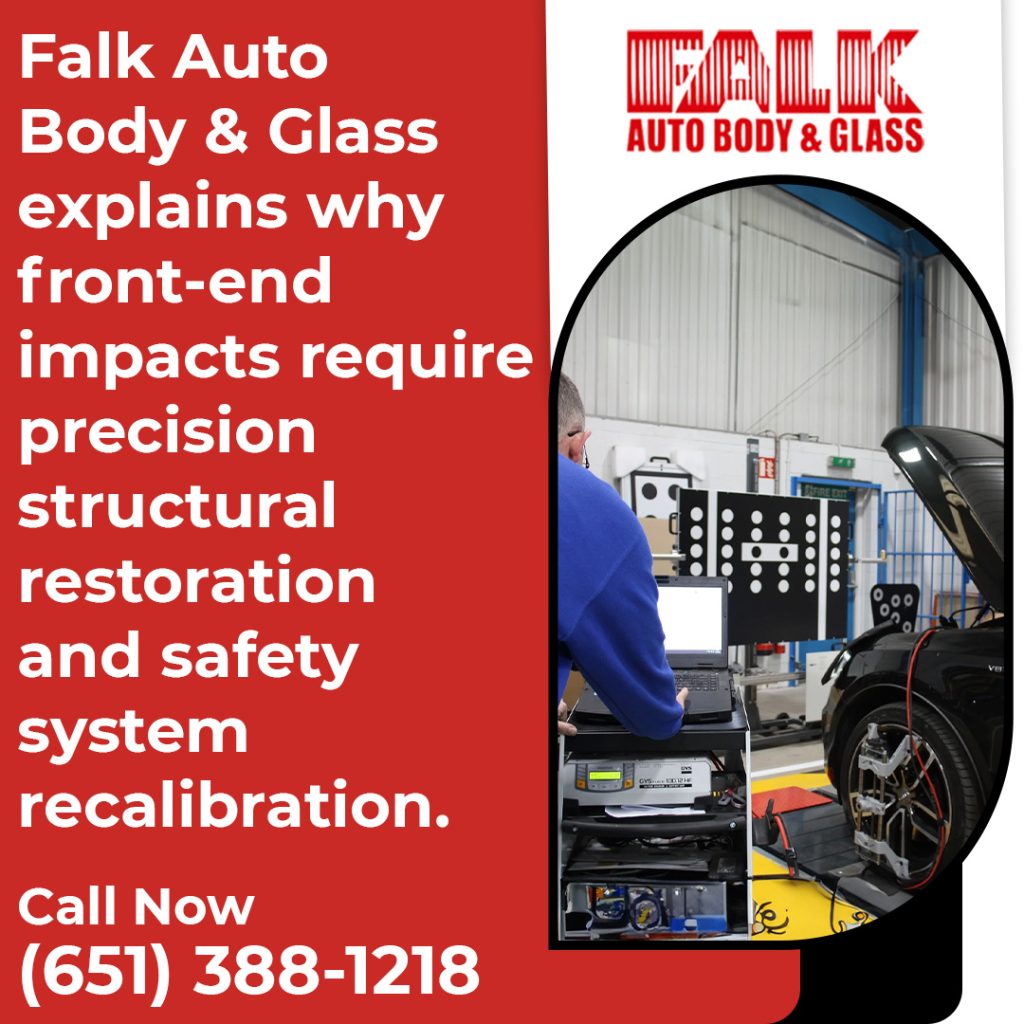
Front-End Collisions and Vehicle Safety
When your vehicle hits something, a lot happens in just seconds. Understanding what’s going on helps you see why proper auto body repair matters so much.
The Way Your Vehicle Protects You During Impact
Modern vehicles feature two distinct structural zones: a front section engineered to deform during collisions, and a reinforced passenger compartment designed to maintain its integrity. When impact occurs, the front section compresses in a controlled manner. While this deformation may appear concerning, it represents a critical safety mechanism working as intended.
During a collision, kinetic energy must be redirected and absorbed. A completely rigid vehicle structure would transfer the full impact force directly to occupants. However, controlled deformation of the front structure extends the duration of impact, reducing the peak forces experienced by passengers. This extended deceleration time decreases injury severity.
The front bumper assembly absorbs initial impact forces. Behind it, crush tubes or crash boxes compress progressively. Further into the structure, frame rails deform according to engineered specifications. These components work together to protect the passenger compartment, which utilizes high-strength materials to resist intrusion and maintain occupant space.
Components Affected by Front-End Impacts
Front-end collisions create both visible and hidden damage. Obvious damage includes damaged bumper covers, broken headlight assemblies, and deformed hood panels. However, structural and electronic component damage often proves more critical to vehicle safety.
The vehicle’s structural framework may be bent or displaced. Radiator support assemblies frequently sustain damage. The firewall separating the engine compartment from the passenger area may be compromised. Each of these structural components must be restored to factory specifications to maintain crash protection.
Modern vehicles incorporate multiple sensors and cameras throughout the front structure. These systems enable features including automatic emergency braking, adaptive cruise control, and lane departure warning. Collision forces can displace these components even when they remain physically intact. Sensors shifted from their calibrated positions cannot provide accurate data, compromising the safety systems that depend on them.
Unique Challenges of Front-End Collision Repair
Fixing front-end damage is more complicated than repairs on other parts of your vehicle. The concentration of safety systems, sensors, and structural components requires specialized auto body repair approaches.
Multiple Materials Requiring Different Approaches
Modern vehicle construction creates significant repair challenges through the use of multiple materials within a single structure. Front-end assemblies combine conventional steel, ultra-high-strength steel, aluminum, and composite materials. Each responds differently to collision forces and requires distinct repair techniques.
Material-Specific Repair Limitations
- Ultra-high-strength steel loses its protective properties if heated beyond specific temperatures during repair.
- Aluminum requires completely separate equipment to prevent cross-contamination that causes long-term corrosion.
- Technicians must identify each material type before beginning repairs, as visual identification alone is often insufficient.
- Mixing repair techniques between materials compromises structural integrity, even when the repair appears successful.
Determining Repair vs. Replacement
Components may appear repairable, but have sustained internal damage that eliminates their crash protection capabilities. Manufacturers specify which parts must be replaced rather than straightened, but these determinations require access to technical service bulletins and repair procedures that many facilities lack. This technical complexity makes choosing a qualified auto body repair shop particularly important for front-end collision damage.
Precision Requirements for Electronic Systems
Front-end structures house multiple sensors enabling advanced driver assistance systems, creating calibration challenges that didn’t exist in older vehicles.
Sensor Displacement During Repair
- Even millimeter-level displacement affects sensor accuracy and system performance
- Bumper replacement, hood alignment, and windshield installation all alter sensor positioning
- Sensors may appear undamaged and continue operating while providing incorrect data
- No dashboard warning alerts the driver that calibration is needed after many types of repairs
Complex Calibration Requirements
Different vehicle manufacturers use proprietary calibration procedures and equipment. Many sensors require both static calibration (performed in-shop with specialized targets) and dynamic calibration (completed through test drives under specific conditions). Missing either step leaves safety systems compromised without a visible indication of malfunction.
Hidden Structural Damage
Visual inspection and test driving cannot reveal structural misalignment, creating the most dangerous challenge in front-end collision repair.
Undetectable Frame Damage
- Vehicles handle normally while retaining frame damage that compromises crash protection.
- Traditional measuring methods cannot detect millimeter-level deviations that affect safety.
- Frame rails may appear straight while having internal stress damage.
- Damage in one area often affects structural integrity in distant locations through force transfer.
Precision Straightening Requirements
Frame straightening requires following the manufacturer-specific pull sequences and attachment points. Incorrect pull angles or sequences create new stress concentrations while appearing to correct visible damage. Without computerized measuring verification at multiple steps, technicians cannot confirm they’re restoring rather than further compromising structural integrity.
These interconnected challenges demonstrate why front-end collision repair demands specialized knowledge and equipment. When evaluating auto body repair near you for front-end collision work, these complexities should guide your questions about the shop’s capabilities and processes.
The Professional Repair Process
Proper front-end collision repair follows systematic steps to restore your vehicle’s safety features to factory specifications.
Comprehensive Damage Assessment
Professional auto body repair service begins with complete diagnostic scanning and thorough inspection before any work starts. Computerized diagnostic tools identify stored collision data and fault codes that reveal which systems were affected. Technicians disassemble damaged areas to examine underlying structures. A crushed bumper cover often hides bent frame rails, fractured mounting points, and sensors pushed out of alignment by impact forces.
Adherence to Manufacturer Procedures
Vehicle manufacturers provide detailed auto body repair procedures specific to each make and model. These instructions specify which components require replacement versus repair, welding temperatures for different materials, torque specifications for fasteners, and structural adhesive application requirements. Quality auto body repair shops should maintain current access to these manufacturer databases, as procedures are updated regularly for new vehicle designs and revised based on field experience.
Precision Structural Restoration
Computerized measuring systems verify frame geometry at multiple reference points throughout the vehicle structure. Hydraulic straightening equipment applies controlled force following manufacturer-specified pull sequences and attachment locations. Technicians measure repeatedly throughout the process to confirm alignment within millimeter tolerances. Material-specific techniques address ultra-high-strength steel welding requirements, aluminum repair in isolated work areas, and structural adhesive bonding procedures.
Post-Repair Verification
Complete verification includes post-repair diagnostic scanning to confirm all systems communicate without fault codes, ADAS calibration, and documentation with photographs and calibration certificates. This systematic verification makes sure that safety systems will function as designed rather than simply appearing operational.
Risks of Improper Crumple Zone Repair
Compromised Crash Protection
If crumple zones aren’t restored to factory specifications, they won’t crush the right way in your next accident:
- Some areas become too stiff and don’t absorb energy properly.
- Other areas become too weak and collapse too easily.
- Crash forces come straight into the passenger area instead of being absorbed by the front end.
Hidden frame damage that wasn’t fixed creates weak spots that can break unexpectedly during a crash. Your vehicle looks normal and drives fine, but it has lost the safety features that should protect you and your family.
Malfunctioning Safety Features
Modern safety features depend on sensors being in exactly the right spot with precise calibration. When auto body repair shops don’t include checking and adjusting these sensors, the features might fail when you need them.
Common Sensor Problems
Forward collision warning systems may monitor adjacent traffic lanes rather than the vehicle’s actual path. Automatic emergency braking can activate inappropriately or fail to engage when collision avoidance is needed. Lane departure warning systems may not detect lane markings accurately. These malfunctions result from sensors that were not recalibrated to manufacturer specifications following structural repairs.
Airbag System Issues
Airbags depend on sensors throughout the vehicle structure to determine proper deployment timing. When sensors remain in incorrect positions after repairs, airbag systems may fail to deploy during collisions, deploy prematurely without adequate cause, or activate at improper intervals. These calibration failures provide no dashboard warnings or visible indicators, remaining undetected until the next collision event occurs.
Progressive Deterioration
Some repair problems don’t show up right away. They get worse over time and can be expensive to fix later.
Corrosion from Improper Material Handling
Galvanic corrosion initiates when steel and aluminum components contact each other due to inadequate isolation during repairs. This corrosion forms beneath painted surfaces and propagates slowly over time. By the time visible signs appear, structural components may have sustained significant weakening that compromises crash protection.
Weak Repairs That Fail Over Time
Welds performed outside specified temperature ranges develop microfractures that propagate under normal driving stresses. Structural adhesive bonds applied without proper surface preparation lose strength progressively. These deterioration patterns weaken the vehicle’s structural integrity while the vehicle maintains normal appearance and handling characteristics.
Selecting Qualified Auto Body Repair Near You
Finding a qualified shop takes some research, but it’s worth the effort to keep your family safe.
Certification and Training Standards
Industry certifications provide objective evidence that a facility maintains current knowledge and capabilities for modern vehicle repair. Look for I-CAR Gold Class certification, which requires ongoing training as vehicle technology evolves. Manufacturer certifications from brands like GM, Ford, or Toyota demonstrate that the shop meets specific equipment and training requirements for those vehicles. Verify that the technicians hold certifications for specialized work such as aluminum welding or ADAS calibration.
Equipment and Technology Requirements
Confirm the shop performs sensor calibration. Verify they have computerized frame measuring equipment, separate aluminum work areas, and current access to manufacturer repair procedure databases. These capabilities distinguish auto body shops that can perform complete, correct repairs from those that cannot.
Process and Documentation
Professional shops explain repair procedures specific to your vehicle and which safety systems require verification. Pre-repair and post-repair diagnostic scanning should be standard practice. Request documentation, including scan reports, repair process photos, and calibration certificates. Verify written warranties cover both parts and labor.
Customer Reviews and Facility Inspection
Review online feedback regarding communication, work quality, and problem resolution. Visit facilities to evaluate equipment and work area organization. Clean, well-equipped shops with staff who answer questions thoroughly typically deliver superior results.
Falk Auto Body & Glass: Red Wing’s Trusted Auto Body Repair Service
Falk Auto Body & Glass has been restoring vehicles safely for Red Wing families since 1958, following manufacturer procedures to protect what matters most.
Our Technical Capabilities
Our facility maintains the specialized equipment required for proper front-end collision repair:
- Computerized measuring systems for precise frame alignment verification.
- ADAS calibration using manufacturer-specific equipment.
- Dedicated aluminum repair area with separate tools to prevent cross-contamination.
- Current manufacturer repair procedure databases for all vehicle makes and models.
Certifications and Manufacturer Approvals
Falk Auto Body & Glass maintains I-CAR Gold Class certification and manufacturer approvals from GM, Hyundai, and Chrysler. These certifications verify our facility meets industry standards for training and equipment. Our technicians receive ongoing education as vehicle repair requirements evolve with advancing technology.
Commitment to Manufacturer Procedures
Families throughout Red Wing, Cannon Falls, Lake City, and Hastings trust Falk Auto Body & Glass because we adhere to manufacturer repair procedures specific to each vehicle rather than applying generic repair methods. This approach ensures safety systems function exactly as engineered following collision repairs.
Transparent Communication and Customer Care
Our team provides clear explanations of repair procedures, detailed estimates, and regular progress updates throughout the process. We work directly with insurance companies to document necessary repairs and justify proper procedures, removing that burden from our customers.
This commitment to transparency and quality is reflected in customer feedback. One recent customer shared: “From the moment I walked in the door it was great experience, they explained the options in detail, once we decided we received very fair estimate, we agreed, the communication was excellent during the process, repair was done in about a week and couldn’t tell it was repaired. I highly recommend Falk auto body and glass for anyone who is looking for quality work at a fair price.“

Protecting Red Wing Families Through Professional Collision Repair
Front-end collisions affect more than how your vehicle looks. The damage to the structure and safety systems needs specialized knowledge and equipment to fix correctly. Your crumple zones have to work exactly as designed to protect you in the next accident.
Your choice of auto body repair near you determines whether your vehicle’s safety features are truly restored. Contact Falk Auto Body & Glass at (651) 388-1218 or mike@falkautobody.com to discuss your repair needs. Visit our Red Wing facility to see why families throughout southeastern Minnesota trust us with their vehicles. We explain procedures thoroughly and answer all questions about proper crumple zone restoration.