Modern vehicles contain between 60 and 100 sensors that monitor collision detection, emissions, safety systems, and performance. These electronic components work with advanced materials like aluminum and high-strength steel to create integrated safety platforms. Repairing collision damage now requires specialized training because these interconnected systems must function precisely to protect occupants during the next accident.
At Falk Auto Body and Glass, Inc., staying current with vehicle technology means delivering auto body repair services that prioritize safety through proper restoration. Our Red Wing facility has served the community since 1958, evolving our expertise as vehicles transformed from mechanical systems to computerized platforms. We restore vehicles throughout Red Wing and the surrounding areas using methods that address both exterior damage and the safety technology protecting your family.
How Modern Vehicles Differ From Older Models
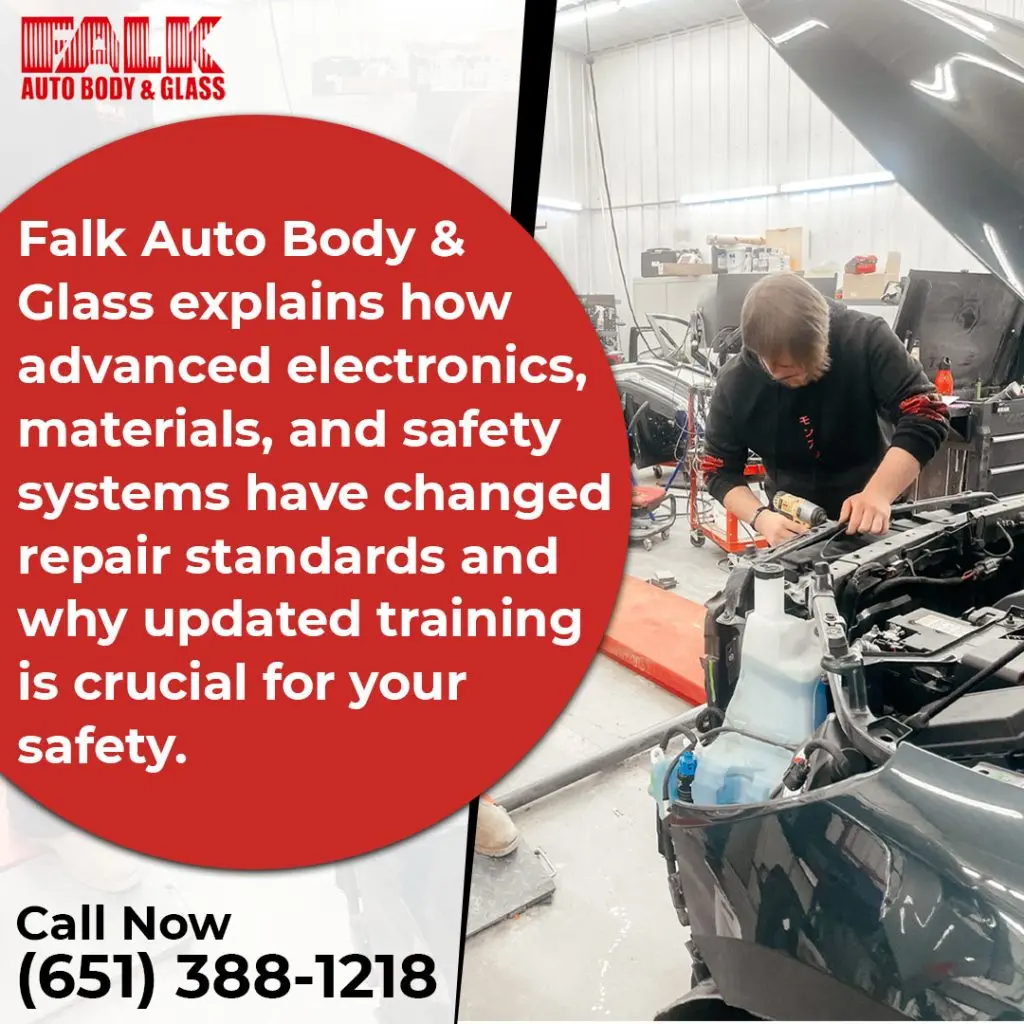
Modern vehicles function as a computer on wheels. The dashboard, safety features, engine management, and comfort systems all rely on sensors collecting data and transmitting information to control units throughout the structure.
Electronic systems control stopping distances through anti-lock braking sensors, manage fuel efficiency through engine monitoring, and deploy airbags using impact detection. Cameras warn about lane departures, while radar systems prevent collisions by detecting obstacles ahead.
Each sensor must be positioned correctly and calibrated precisely. Even minor collision damage can shift sensor locations by millimeters, which prevents accurate detection and response. A bumper repair affects radar sensors. Windshield replacement impacts cameras. Frame straightening changes mounting points for safety equipment.
Multiple Material Construction
Manufacturers also build vehicles using multiple materials in a single structure. Ultra-high-strength steel provides maximum protection in passenger compartments. Aluminum reduces the weight in hoods and doors. Composite materials absorb impact in bumper covers.
Each material behaves differently during collisions and requires specific auto body repair methods. Steel can be heated and reshaped. Aluminum reacts unpredictably to heat and may weaken or disintegrate. Mixing materials through shared tools causes corrosion that appears months later.
Why Safety Systems Demand Specialized Knowledge
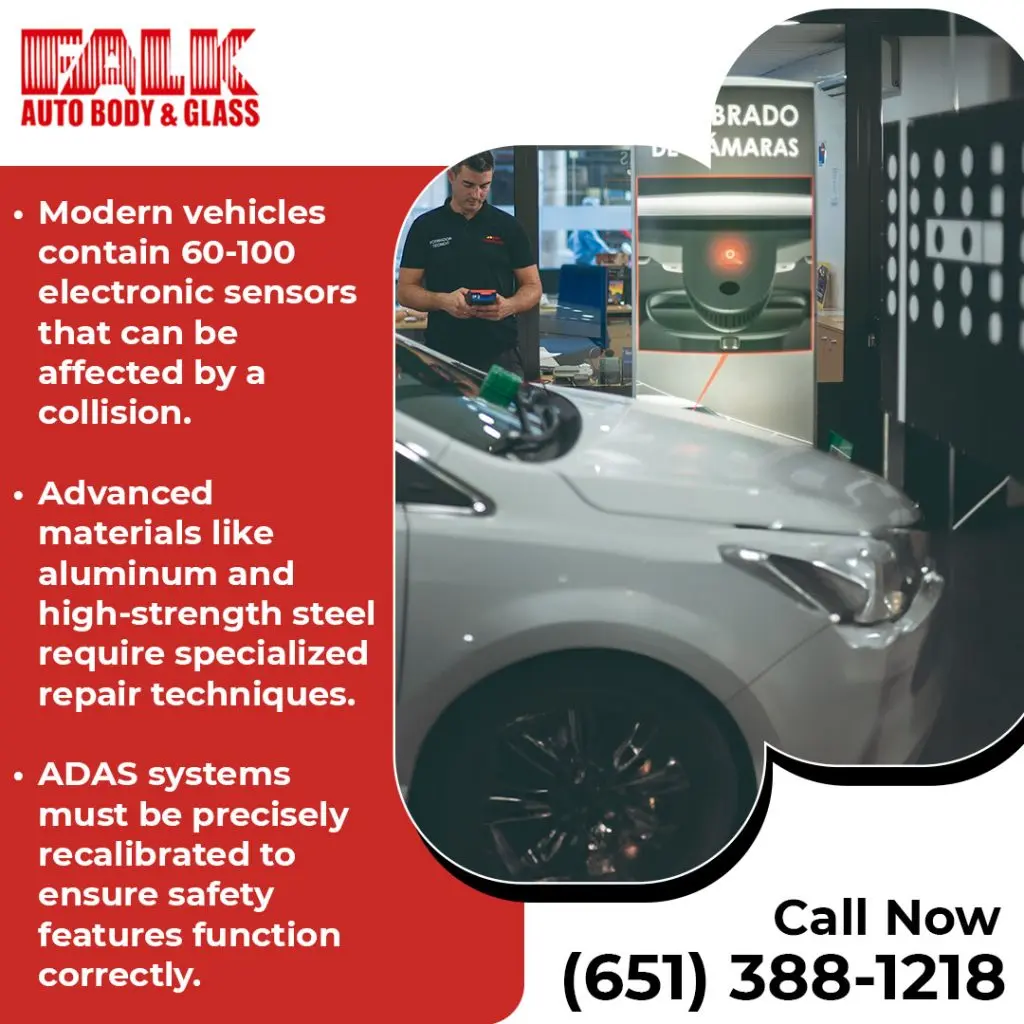
Advanced Driver Assistance Systems (ADAS) represent the electronic safety features in modern vehicles, like automatic emergency braking and lane departure warnings. These systems depend on sensors positioned at precise locations and angles.
Forward collision warning uses radar embedded in the front bumper. The system measures distance to vehicles ahead and calculates closing speeds. When collision risk increases, it alerts the driver or activates automatic braking.
How Collision Damage Affects ADAS
Improper bumper repairs can shift the radar position by small amounts. The sensor still functions, but points in the wrong direction. It might detect vehicles in adjacent lanes instead of directly ahead. Or it might miss vehicles directly in the path because the angle changed during repairs.
Lane departure warning relies on cameras mounted behind the windshield. These cameras identify lane markings and track vehicle position. When the vehicle drifts without turn signals activated, the system alerts the driver.
Windshield replacement changes the camera position and angle. Without recalibration, the camera might identify shadows as lane markings. Or it might fail to detect actual lane boundaries. The system appears functional but provides incorrect information.
The Recalibration Process
Restoring ADAS functionality requires specific steps that untrained technicians might skip. The process begins with diagnostic scanning before any repairs start. This reveals which systems detected the collision and stored fault codes.
Static calibration happens in the shop using targets positioned at manufacturer-specified distances and angles. The vehicle sits on a level floor in controlled lighting. Technicians use specialized equipment and software for each vehicle brand.
Dynamic calibration requires driving the vehicle at specific speeds on particular road types. The systems learn their environment and verify accurate detection. Both calibration types may be necessary depending on which systems were affected.
Missing calibration steps leave safety features non-functional, even though warning lights don’t appear. The vehicle looks repaired, drives normally, and shows no dashboard alerts. But the invisible safety systems that should protect occupants during emergencies are compromised.
Material-Specific Repair Requirements
Modern manufacturers use aluminum extensively because it weighs less than steel while providing superior crash protection. However, aluminum requires completely different repair approaches than steel.
Why Aluminum Demands Separate Training
Aluminum conducts heat differently. It doesn’t change color when reaching critical temperatures like steel does. Excessive heat alters the molecular structure of aluminum and eliminates its strength properties. Too little heat prevents proper bonding.
Aluminum generates dust during cutting and grinding. When this dust mixes with steel particles in the air, it creates explosion hazards. Shops need separate work areas with dedicated ventilation for aluminum repairs.
Tools used on steel cannot touch aluminum. Cross-contamination accelerates corrosion. Professional facilities maintain separate hand tools, power tools, and welding equipment for aluminum work.
High-Strength Steel Challenges
High-strength steel presents different challenges. This material provides exceptional protection in structural areas but requires precise welding temperatures. Overheating changes the steel’s properties and creates weak points that fail during collisions.
Manufacturers specify which structural components can be straightened and which must be replaced entirely. These decisions affect crash protection. Untrained technicians might attempt repairs on components that require replacement, compromising the engineered safety structure.
Structural Integrity and Crash Protection
The vehicle’s frame or unibody structure distributes collision forces according to engineered paths. Crumple zones absorb impact energy in specific sequences. Frame rails deflect forces away from the passenger compartment.
Load Path Engineering
When repairs don’t restore these load paths correctly, the structure may collapse differently during the next collision. The vehicle appears straight and drives properly, but the invisible safety architecture is fundamentally altered.
Frame straightening requires precision measuring systems that verify alignment within millimeters of factory specifications. Hidden misalignment compromises crash protection even when the vehicle tracks straight down the road.
Welding Impact on Safety
Welding techniques directly affect structural strength. Improper welds create weak points that fail prematurely. Or they create overly rigid areas that transfer excessive force to passengers instead of absorbing energy.
Using incorrect materials in structural repairs defeats the engineering that protects occupants. Substituting regular steel for high-strength steel prevents proper energy absorption. Using aftermarket structural components that haven’t undergone crash testing introduces unknown variables into the safety equation.
Diagnostic Equipment and Computer Systems
Modern vehicles store crash data throughout their computer networks. This information reveals which airbags deployed, which sensors detected impacts, and which systems require attention.
Pre-Repair Scanning Importance
Pre-repair scanning identifies hidden damage not visible during physical inspection. A front-end collision might trigger fault codes in the airbag system even though no warning lights appear. Rear sensors might store crash data despite no visible rear damage.
Diagnostic scanning also reveals pre-existing problems unrelated to the current collision. These conditions should be documented before auto body repairs begin. This is to prevent disputes about which issues resulted from the accident.
Post-Repair Verification
Post-repair scanning confirms all systems communicate correctly and no fault codes remain active. This verification catches problems before you drive away. Systems might appear functional but have subtle errors that only diagnostic equipment detects.
Some technicians clear diagnostic trouble codes without addressing underlying problems. This makes warning lights disappear and creates the appearance of proper repair. But the safety systems remain non-functional. Professional auto body repair shops validate their work according to manufacturer procedures rather than simply clearing codes.
Why Manufacturer Procedures Matter
Vehicle manufacturers design specific repair procedures tailored to their unique materials, structural designs, and integrated safety systems. These procedures specify which components can be repaired versus replaced, which welding techniques to use, where measurements must be verified, and how safety systems must be recalibrated.
Procedure Adherence Benefits
Following manufacturer procedures maintains crash protection, preserves warranties, and protects resale value. Deviating from these specifications compromises safety even when the vehicle looks perfect.
Auto body repair shops with manufacturer certifications have access to technical service bulletins and repair manuals updated regularly as new models are introduced. These resources provide step-by-step instructions for repairing specific damage on particular vehicles.
Brand-Specific Requirements
Generic repair methods that worked on older vehicles may damage modern safety systems. Each model year can introduce new sensors, updated materials, or revised structural designs requiring different approaches.
When you need auto body repair near you, manufacturer certifications indicate which facilities have invested in brand-specific training and equipment. These certifications mean the shop has demonstrated competency in repairing that manufacturer’s vehicles according to their specifications.
The Training Gap in the Industry
Many collision repair facilities operate with technicians trained decades ago, when vehicles contained few electronic systems and used steel construction primarily. These skills don’t transfer to modern vehicle repairs.
Required Skill Updates
Modern auto body repair demands specialized training in several distinct areas:
- Aluminum welding requires separate certification due to material-specific techniques.
- ADAS calibration involves equipment and procedures unique to electronic safety systems.
- High-strength steel repair needs updated welding methods that differ from traditional approaches.
- Diagnostic scanning requires understanding vehicle computer systems rather than mechanical components.
Facilities that haven’t invested in current training cannot safely repair modern vehicles, regardless of how experienced their technicians are with older models. Experience matters, but only when combined with education on contemporary vehicle technology.
Certification Standards
The I-CAR Gold Class designation indicates ongoing training across all repair disciplines. This certification requires annual renewal as vehicle technology evolves. Shops maintaining this status demonstrate commitment to staying current rather than relying on outdated methods.
Risks You Face With Improper Repairs
Vehicles repaired without proper training create several dangerous situations. Airbags may deploy incorrectly or fail to activate. Collision warning systems might provide false alerts or miss actual hazards. Automatic braking could engage at inappropriate times or fail when needed.
Hidden Structural Damage
Structural damage that wasn’t fully repaired compromises protection during your next accident. Frame components that appear straight might have hidden stress points that fail under impact. Welds performed incorrectly create weak spots in the safety structure.
Long-Term Material Degradation
Materials repaired improperly will deteriorate over time. Aluminum affected by cross-contamination corrodes in ways not visible until panels are removed. Structural adhesives applied without proper surface preparation lose bond strength gradually.
These problems may not become apparent immediately. The vehicle drives normally and looks perfect. But the invisible safety systems and structural protections that should protect your family are compromised.
Evaluating Auto Body Repair Near You: Key Questions
What certifications does your shop hold?
Professional facilities maintain current certifications that demonstrate proper training and equipment for modern vehicle repairs. Verify they hold manufacturer approvals for your vehicle brand and recognized industry certifications like I-CAR Gold Class, which requires annual renewal as vehicle technology evolves.
How will you repair my specific make and model?
Professional facilities explain manufacturer procedures rather than providing generic descriptions. They discuss which safety systems your damage affects and how they’ll recalibrate those features.
Do you perform ADAS calibration?
Confirm they perform ADAS calibration at their facility rather than sending vehicles elsewhere. Shops with their own calibration capabilities reduce repair time and coordination problems.
What diagnostic equipment do you use?
Find out what diagnostic scanning equipment they use for pre-repair and post-repair verification. Professional shops use manufacturer-specific tools to identify hidden damage before repairs begin and verify that all systems function correctly after repairs are complete.
What documentation will I receive after repairs?
Complete records should include diagnostic scan reports, calibration certificates, and photos throughout the repair process. Written warranties should cover both parts and labor.
Falk Auto Body & Glass: Certified for Modern Vehicles
When you search for auto body repair near you, you deserve facilities that have invested in training and equipment for modern vehicle complexity. Falk Auto Body & Glass serves Red Wing families with technicians trained in modern vehicle repair requirements. We maintain I-CAR certifications and manufacturer approvals from GM, Hyundai, and FCA because your safety depends on proper procedures.
Our Technical Capabilities
Our Red Wing facility provides the specialized capabilities modern repairs require:
- Diagnostic scanning equipment for complete system verification before and after repairs.
- ADAS calibration performed on-site with manufacturer-specific tools.
- Separate aluminum welding area with dedicated equipment to prevent cross-contamination.
- Computerized measuring systems for precise structural alignment verification.
- Access to manufacturer repair databases updated regularly for new vehicle models.
We follow manufacturer repair procedures for your specific vehicle rather than applying generic methods. This means your repairs restore safety features exactly as the automaker engineered them.
Community Trust
Families throughout Red Wing, Cannon Falls, Lake City, and Hastings trust Falk Auto Body & Glass because we refuse shortcuts that compromise safety. We’ve built our reputation on transparent communication and quality workmanship that stands behind every repair.
One recent customer shared their experience: “I can’t say enough good things about Falk Auto Body. From start to finish, they went above and beyond to take care of me and my vehicle. Their communication was outstanding – clear updates, honest timelines, and zero surprises. The team truly treats you like family, not just another job on the schedule. The quality of their work is exceptional. My Truck came back looking better than it did before the damage, and they paid attention to every little detail. It’s rare to find a shop that genuinely cares about their customers the way they do. If you’re looking for people who are trustworthy, knowledgeable, and take pride in their craftsmanship, this is the place.“
This feedback reflects what matters most to us: treating every customer with respect, maintaining clear communication throughout repairs, and delivering quality work that exceeds expectations.
Your Safety Requires Properly Trained Technicians
Modern vehicle technology protects your family through sophisticated systems that must function precisely. Auto body repairs affect these systems, whether the damage appears minor or severe.
Only technicians with current training can safely restore modern vehicles because the materials, computer systems, and safety features require specialized knowledge that didn’t exist a decade ago. Experience with older vehicles doesn’t prepare technicians for contemporary repair challenges.
When you need auto body repair service, choosing properly trained technicians protects both immediate safety and long-term vehicle value. The difference between certified facilities and auto body repair shops cutting corners becomes apparent during your next collision, when safety systems either protect you properly or fail because of inadequate repairs.
Contact Falk Auto Body & Glass at (651) 388-1218 or mike@falkautobody.com to discuss your collision repair needs. Visit our facility to see our certifications, meet our trained technicians, and learn how modern facilities should operate. We provide detailed explanations of procedures your vehicle requires and answer all questions about why training matters for your safety.