Animal-related vehicle damage requires specialized auto body repair to restore both visible exterior components and hidden structural elements. Professional shops assess impact damage, replace affected parts using manufacturer specifications, and recalibrate safety systems to return vehicles to pre-incident condition.
Falk Auto Body and Glass, Inc has served Red Wing and the surrounding areas, including Cannon Falls, Lake City, and Hastings, since 1958. We combine manufacturer-recommended repair procedures with modern diagnostic equipment to address both visible damage and hidden structural concerns. This article examines common animal damage types affecting southeastern Minnesota drivers and the professional repair methods that restore vehicles properly.
Animal Damage Patterns in Red Wing and Southeastern Minnesota
Wildlife activity in southeastern Minnesota creates distinct vehicle damage patterns based on seasonal behavior, terrain features, and local animal populations. The Mississippi River corridor running through Red Wing supports diverse wildlife populations. Wooded bluffs near Barn Bluff and Memorial Park provide deer habitat close to roadways. Agricultural lands surrounding Cannon Falls and Lake City attract animals moving between feeding areas and shelter.
Highway 61 between Red Wing and Lake City passes through rural areas where deer crossings increase during the fall mating season from October through December. County roads connecting smaller communities traverse agricultural fields where animals feed during dawn and dusk hours.
The Mississippi River flyway brings thousands of migratory birds through Red Wing twice annually. Spring and fall migrations from March through May and September through November concentrate waterfowl along Highway 61’s river corridor. Geese flying in formation at dawn sometimes misjudge vehicle speeds, leading to windshield strikes. Turkey vultures soaring near agricultural fields around Cannon Falls occasionally collide with vehicles on county roads where thermal updrafts draw them low across pavement.
Deer Collision Damage Common to Area Roadways
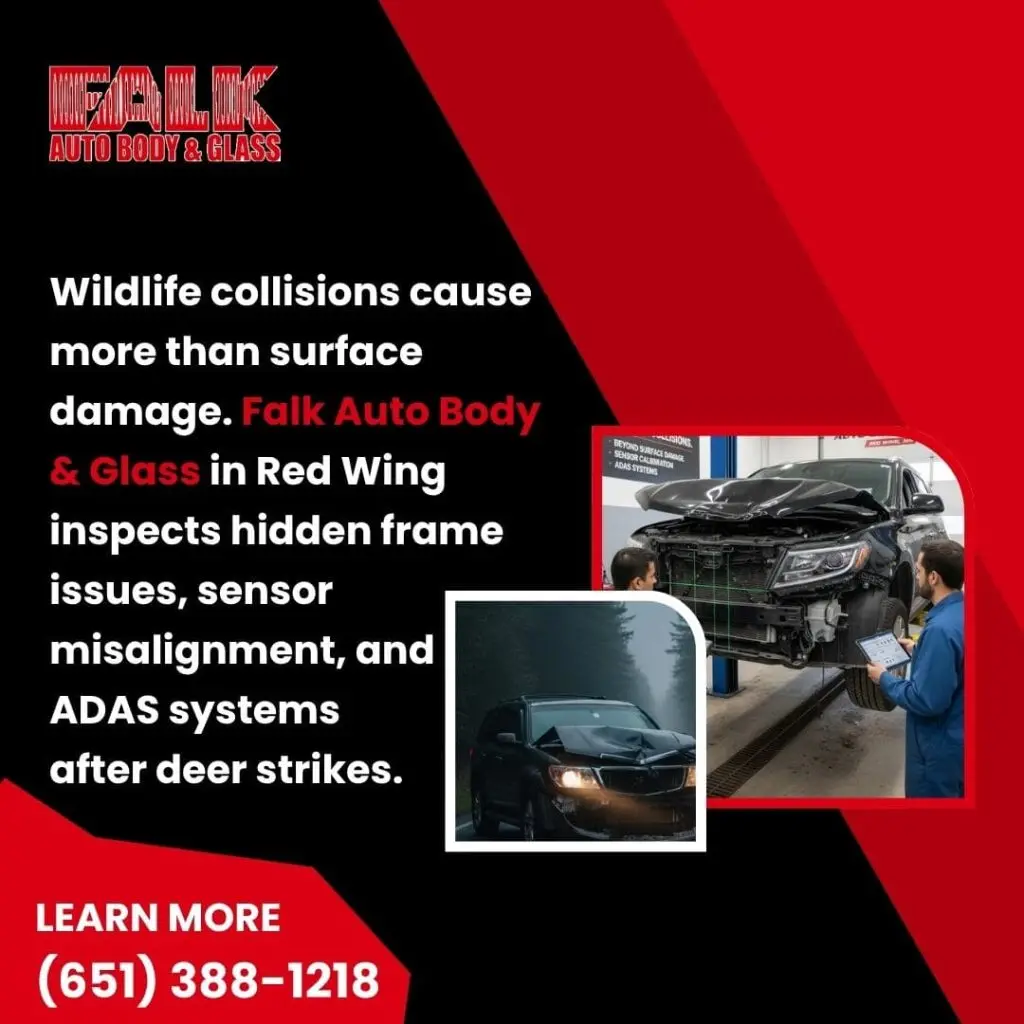
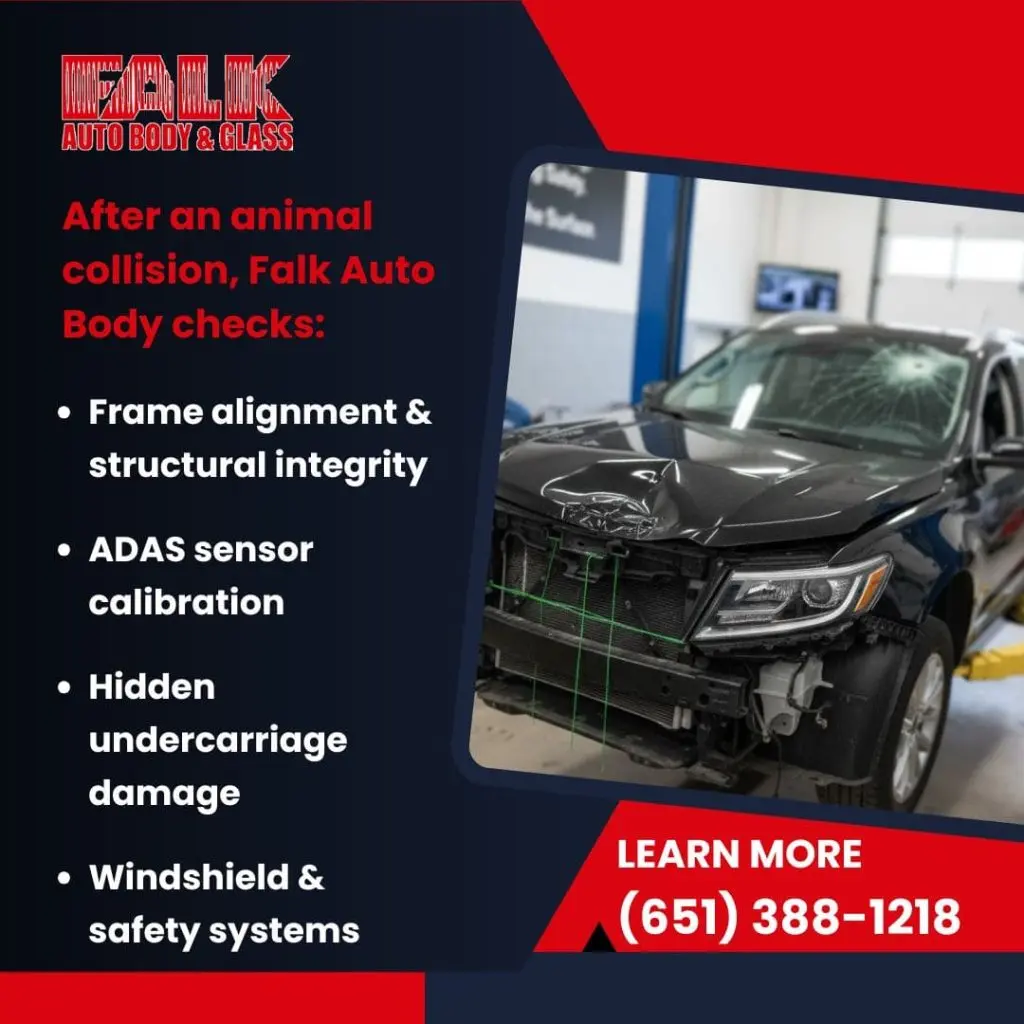
Deer strikes typically damage front bumpers, hoods, fenders, headlight assemblies, and windshields. Hidden damage beneath visible components often requires frame alignment and suspension inspection.
Between July 2024 and June 2025, U.S. drivers filed 1.7 million animal collision insurance claims, with deer accounting for the majority of incidents. Red Wing drivers face regular encounters with wildlife throughout the year. Insurance data shows that about 1 in 81 Minnesota drivers experienced a collision with an animal, underscoring the high prevalence of such incidents.
Red Wing area roadways create specific collision scenarios based on terrain. For example, Highway 61’s river bluff sections limit deer escape routes, forcing animals onto pavement when startled. County Road 18 near Goodhue passes through wooded areas where deer populations concentrate.
Front-End Component Assessment
Bumper assemblies absorb initial impact during these collisions, but what you see on the surface rarely tells the complete story. Modern bumpers contain plastic covers over metal reinforcement bars, with mounting brackets securing components to the frame. The visible cover might crack or crush, while the reinforcement bar underneath bends or breaks completely.
This is why professional auto body repair begins with complete bumper removal. Technicians need to see what happened behind that damaged cover. They inspect reinforcement bars for bending, check mounting brackets for cracks, and examine frame attachment points for any deformation. Sometimes, plastic covers with minor cracks respond well to patch and paint procedures. Other times, the damage runs too deep and replacement becomes necessary.
Headlights often don’t survive deer strikes either. Modern headlights integrate multiple components: housing, lens, bulbs, and electronic control modules working together. When these break, replacement requires exact OEM (Original Equipment Manufacturer) specifications. This precision maintains proper beam patterns and prevents electrical issues that could leave you driving dark roads at night.
Hood and Fender Restoration
The hood usually shows obvious damage after a deer collision. Dents, creases, and paint damage spread across the surface where the animal made contact. Minor dents may respond to paintless dent repair when the paint remains intact and the metal hasn’t stretched beyond its natural flexibility. Deep creases or punctures tell a different story. These require conventional auto body repair using body filler or complete panel replacement.
Fenders present their own challenges. They attach to frame rails and support both headlight assemblies and bumper ends. When impact damage bends these mounting points, simple replacement won’t fix the problem. The new fender needs precise alignment during installation.
Structural and Mechanical Inspection
Sometimes the force of impact exceeds what your bumper can absorb. When this happens, frame damage occurs. Those crumple zones that engineers designed to protect you may compress or bend. Straightening this damage requires specialized equipment that most shops don’t have.
The collision sends shock waves through your vehicle’s structure. Suspension components suffer damage when deer strikes create vertical or rotational forces. Ball joints, control arms, and shock absorbers may bend or crack without any visible exterior evidence. These problems can be identified using a diagnostic inspection.
Hidden damage extends beyond the frame and suspension. Radiator punctures result from direct hood compression or debris penetration during impact. If coolant starts leaking from your radiator, it demands immediate attention. Without repair, your engine will overheat and sustain damage far exceeding the original collision. This is why auto body repair shops pressure-test cooling systems after collision repairs.
Bird and Small Animal Impact Damage
Bird strikes primarily damage windshields, paint surfaces, and hood panels, requiring glass replacement or paint repair depending on impact severity. Small ground animals like raccoons and skunks cause undercarriage and lower body panel damage that demands professional auto body repair service.
Windshield Damage Assessment
Windshield consists of two glass layers with plastic lamination sandwiched between them for strength and safety. When a bird strikes your windshield, the impact creates star-pattern cracks if the force exceeds what the glass can withstand.
Proper damage assessment examines three critical factors: crack size, location relative to your sight lines, and how deeply the damage penetrates through the glass layers. These factors determine whether repair or replacement gives you the safest outcome.
Small chips work differently from large cracks. Chips smaller than a quarter located outside your primary viewing area may accept resin injection repair. This process fills cracks with specialized material that bonds with the surrounding glass. The repair restores structural integrity and prevents the crack from spreading across your windshield during your next drive on bumpy country roads.
Larger damage tells a different story. Cracks exceeding one inch in diameter, star breaks with multiple branches, or damage penetrating both glass layers require complete windshield replacement. Modern vehicles add another layer of complexity. Advanced Driver Assistance Systems (ADAS) mount cameras to windshields to monitor the road ahead. After replacement, these cameras need recalibration to restore lane departure warning, automatic emergency braking, and collision avoidance features that keep you safe.
Paint and Body Panel Repair
Bird strikes leave their mark on more than glass. Paint damage ranges from surface scratches to metal dents, depending on the bird’s size and your speed at impact. Surface scratches affecting only clear coat layers respond well to buffing and polishing during professional auto body repair.
Deeper scratches present bigger problems. When damage reaches primer or bare metal, paint application becomes necessary to prevent corrosion. This protection matters especially in Minnesota, where road salt exposure during winter months accelerates rust formation on exposed metal.
Unstretched metal accepts paintless dent repair, which costs less and completes faster. Stretched areas require filler application, sanding, and refinishing to restore the hood’s original contour.
Undercarriage Component Damage
Not all animal damage happens at eye level. Vehicles passing over raccoons, skunks, or similar animals at speed sustain undercarriage damage that hides beneath your vehicle. Plastic covers protecting engines and transmissions crack or tear from the impact. Exhaust system hangers and heat shields bend when animal bodies strike them.
Quality auto body repair shops provide thorough undercarriage inspection as part of animal damage assessment. This examination checks frame rails, suspension components, and fluid-carrying systems for impact damage you can’t see from above. Oil pans, transmission cases, and differential housings require particularly careful assessment. Small cracks in these components may cause slow leaks that worsen over time.
Safety System Restoration After Animal Damage
Modern vehicle safety systems require diagnostic scanning and recalibration after animal damage affecting bumpers, windshields, or body panels, housing sensors and cameras. This process verifies the proper operation of collision avoidance and driver assistance features that protect you and your passengers.
Vehicles manufactured after 2015 increasingly incorporate electronic safety features that work invisibly in the background. These systems create a safety net around your vehicle. When animal damage disrupts this network, a professional auto body repair service must restore every component to factory specifications.
Sensor and Camera Positioning
ADAS (Advanced Driver Assistance Systems) components require positioning within millimeter tolerances to function correctly. When animal damage displaces bumper covers even slightly, the alignment of the radar sensors in it shifts. This misalignment causes false warnings that beep constantly or detection failures that leave you unprotected when you need help most.
Windshield replacement creates similar problems. New glass changes camera mounting angles by fractions of a degree. These tiny shifts affect lane marking recognition accuracy, causing your vehicle to drift between lines or miss warnings entirely.
Recalibration procedures follow manufacturer specifications for each vehicle make and model. Auto body repair technicians align your vehicle precisely, then run calibration software that teaches sensors their correct position.
Professional auto body repair shops invest in calibration equipment specific to multiple vehicle brands. This capability eliminates delays associated with outsourcing calibration work to other facilities.
Diagnostic Scanning Requirements
Modern vehicles remember what happened during collisions. Pre-repair scanning identifies fault codes stored in vehicle computer systems during impact events. These codes reveal which sensors detected abnormal conditions and whether safety systems disabled protective features to prevent further problems.
Post-repair scanning verifies that all systems function properly without stored fault codes. This confirmation step documents proper repair completion and system readiness.
Frequently Asked Questions
Can small animal damage get worse if I wait to repair it?
Yes. Small cracks in windshields spread across your field of vision. Minor frame misalignment causes uneven tire wear. Coolant leaks from the radiator damage lead to engine overheating. What looks like cosmetic damage often hides structural problems that worsen with every mile you drive.
Will my insurance cover deer collision repairs?
Comprehensive auto insurance policies typically cover animal-related vehicle damage. This includes deer strikes, bird impacts, and damage from raccoons or other wildlife. You’ll pay your deductible, and your insurance handles the rest.
How do I know if there’s hidden damage after hitting a deer?
You can’t tell by looking. Deer strikes bend frame rails, damage suspension components, and crack radiators beneath crushed bumpers. Dashboard warning lights indicate sensor damage or system failures. Fluid leaks, unusual noises, or pulling to one side while driving signal hidden problems. When searching for auto body repair near you, choose shops that use diagnostic scanning and thorough inspection to find damage you can’t see from the surface.
Why does animal damage repair take longer on newer vehicles?
Modern vehicles contain safety sensors and cameras in bumpers and windshields. After animal damage, these systems need recalibration to function correctly. Not every shop owns calibration equipment for Advanced Driver Assistance Systems (ADAS). Shops with in-house calibration complete repairs faster than facilities that outsource this specialized work.
Should I repair minor bird damage to my paint?
Yes. Bird strike scratches reaching bare metal allow moisture and road salt to cause rust. This is particularly problematic for Minnesota vehicles exposed to harsh winter conditions. Surface scratches respond to buffing and polishing during professional auto body repair service. Deeper damage needs a paint application to prevent corrosion from spreading beneath your vehicle’s finish.
Professional Animal Damage Repair at Falk Auto Body & Glass
Falk Auto Body & Glass brings decades of experience to animal damage repair throughout Red Wing and the surrounding southeastern Minnesota communities. Our facility maintains current manufacturer repair procedures for all vehicle makes and models, applying factory-specified techniques to restore safety and function.
Fast Response When You Need It Most
When you need reliable auto body repair near you after an animal collision, our team responds quickly to get you back on the road. We understand that hitting a deer or other wildlife disrupts your daily routine, which is why we prioritize rapid assessment and repair scheduling.
One recent customer shared their experience: “I hit a deer and Falk Auto Body was able to get me in right away; repairs only took a week and a half. Mike went above and beyond to make sure I had a vehicle to use in the mean time and get the repairs done in a timely manner. Allie was also very kind and helpful with the rental car situation.“
This feedback reflects our commitment to minimizing the inconvenience animal damage creates. We provide rental assistance, maintain clear communication throughout the repair process, and work efficiently without sacrificing quality.
Expertise That Keeps Pace with Technology
Our technicians receive ongoing training in emerging vehicle technologies and repair methods. This commitment keeps our team current with aluminum repair, advanced safety system calibration, and modern paint refinishing techniques suited to Minnesota’s climate challenges.
Falk Auto Body & Glass coordinates directly with insurance companies, handling documentation and communication to simplify the claims process. Our transparent approach includes detailed damage assessment, honest parts recommendations, and realistic repair timelines based on actual work requirements.
Safeguard Your Vehicle After Animal Encounters in Red Wing
Animal damage requires professional assessment even when the damage appears minor. Hidden structural issues, compromised safety systems, and developing electrical problems often remain invisible without proper inspection. Delaying repairs allows minor damage to worsen, increasing eventual repair scope and safety risks.
For expert auto body repair near you after animal collisions, contact Falk Auto Body & Glass at (651) 388-1218 or mike@falkautobody.com. Our family-owned business has served Red Wing and nearby areas since 1958, building lasting relationships through quality workmanship and honest service.