
Modern vehicles contain safety systems that depend on cameras and sensors mounted to your windshield. When you replace damaged glass, these systems lose their precise alignment. Without proper calibration, your vehicle’s protective features may fail to detect hazards or respond incorrectly during critical moments.
The technology in today’s vehicles goes far beyond simple transportation. Forward-facing cameras monitor lane markings, detect pedestrians, and measure distances to vehicles ahead. These cameras work through your windshield, and any disruption to their positioning compromises their ability to keep you safe.
At Falk Auto Body and Glass, Inc, our windshield repair services address both the visible damage to your windshield and the invisible recalibration your safety systems require. This guide explains what ADAS calibration involves and why windshield replacement affects these systems.
What ADAS Is and Why It Matters
Advanced Driver Assistance Systems (ADAS) are electronic safety features that help drivers avoid collisions and maintain safe driving conditions. These systems use cameras, radar, and sensors to monitor your vehicle’s surroundings and alert you to dangers. In some situations, they intervene automatically to prevent accidents.
Human error is widely recognized as the leading factor in the vast majority of car accidents. Most vehicle crashes result from driver mistakes such as distraction, poor decision-making, speeding, and impaired driving. ADAS technologies directly address this problem by providing real-time data about road conditions, nearby vehicles, pedestrians, and lane positioning.
Common Systems Connected to Your Windshield
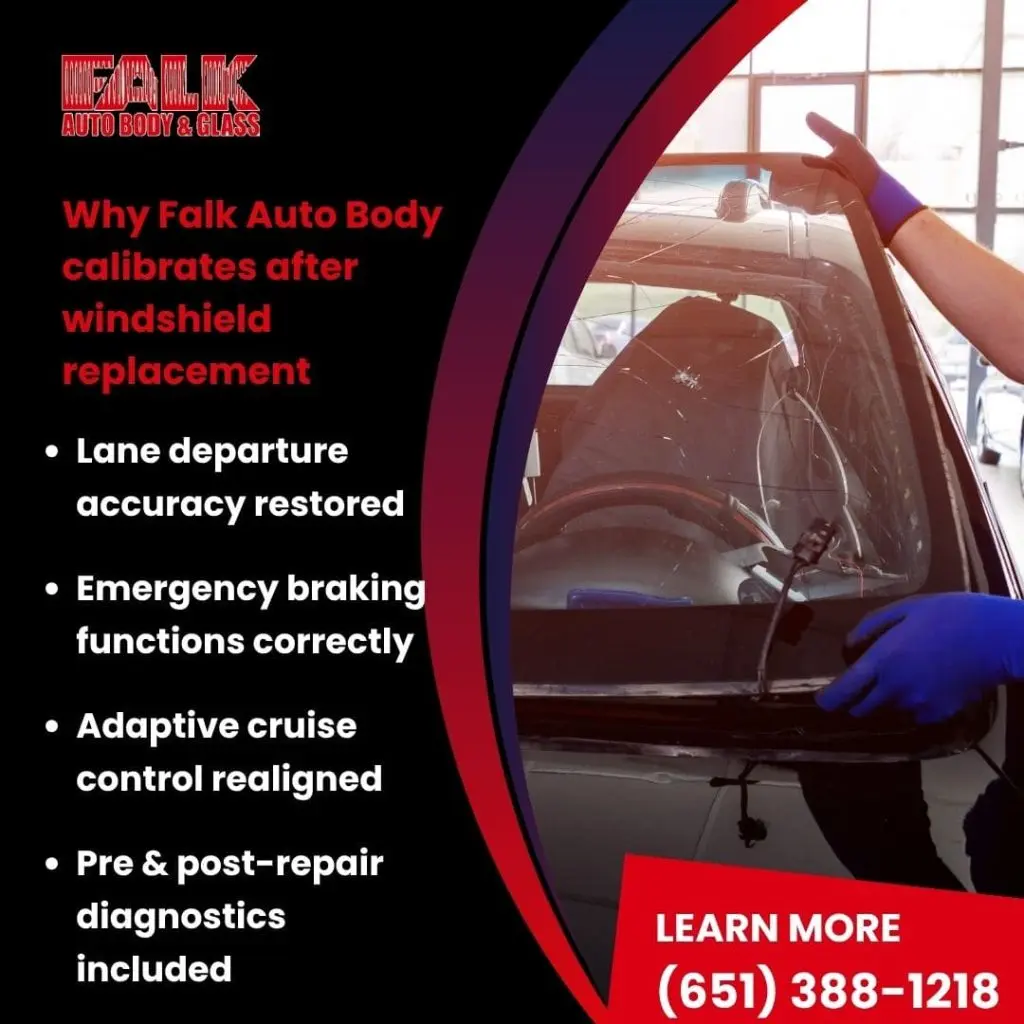
Your windshield hosts the forward-facing camera that powers multiple safety systems. This single camera often controls several protective features working together.
- Lane departure warnings track road markings and alert you when your vehicle drifts from its lane without signaling. Research shows that these systems reduce single-vehicle, sideswipe, and head-on crashes by approximately 11 percent. Injury crashes drop by 21 percent when vehicles include lane departure technology.
- Automatic emergency braking takes control when you don’t respond to collision warnings. The system applies brakes automatically to avoid impact or reduce collision severity. Forward collision warning paired with automatic emergency braking reduces rear-end crashes by 50 percent.
- Adaptive cruise control maintains your set speed while automatically adjusting to keep safe distances from vehicles ahead. The system slows down when traffic appears and resumes your chosen speed when the road clears. This feature reduces driver fatigue during highway travel by managing speed and following distance automatically.
- Forward-facing cameras and sensors serve as the eyes of your ADAS. These components must see clearly through your windshield to interpret road conditions accurately. The camera position, angle, and view through the glass determine whether your safety systems can detect hazards and respond appropriately.
How These Features Rely on Precise Alignment
ADAS cameras require exact positioning to function correctly. Vehicle manufacturers calibrate these cameras during production to specific angles and positions measured in fractions of degrees. Even a very small shift in the alignment of the forward-facing camera can result in the collision avoidance system being off by several feet at typical operating distances.
The camera interprets distances, angles, and positions based on its calibrated viewpoint. When that viewpoint changes even slightly, the system’s calculations become inaccurate. This is why professional auto glass repair near you must include proper ADAS calibration as part of windshield replacement, not as an optional add-on.
Why Windshield Replacement Impacts ADAS
Removing your windshield disrupts the precise alignment of mounted cameras and sensors. Even when technicians reinstall these components carefully, tiny variations in positioning affect how systems interpret road conditions. Understanding these changes helps explain why auto glass repair requires calibration as part of proper windshield replacement.
Camera Position Changes During Replacement
The camera and sensor mount sit on or near the glass, so even slight changes in angle or position throw the system off. Technicians must remove the camera bracket to access damaged glass. When they reinstall the bracket on new glass, achieving the same position and angle becomes impossible without specialized calibration equipment.
Mounting bracket position varies slightly between installations. Even with precise work, brackets don’t return to the same location they occupied before removal. Temperature changes during adhesive curing can shift windshield positioning by small amounts. Your vehicle’s frame flexes microscopically under normal stress. These factors mean the final resting position of your new windshield differs from the original placement.
Glass Variations That Affect Camera Performance
New glass may have minor variations in thickness, tint, or curvature that require recalibration. Your windshield functions as a second lens through which the camera views the road. No two pieces of glass are identical. Manufacturing variations create slight differences in clarity, thickness, and curvature between your original windshield and the replacement.
The camera was calibrated to see through your specific original windshield, accounting for that particular piece of glass. When you install new glass, the camera continues operating as if viewing through the old windshield. This mismatch causes the system to misinterpret distances, angles, and positioning.
Installation Variables Requiring Adjustment
Adhesive curing and glass placement can shift alignment as materials settle into their final positions. Professional installation uses adhesives that meet manufacturer specifications for strength and curing time. The bonding process requires precise timing and environmental conditions to achieve proper adhesion between the glass and the vehicle frame.
As adhesive cures, chemical reactions generate heat and cause slight material movement. This movement can alter the camera position by fractions of millimeters. While these changes seem tiny, they create measurement errors at the distances where ADAS systems must detect hazards. Installers must wait for the adhesive to cure adequately before beginning calibration work.
Risks of Skipping Calibration
Skipping calibration leads to false alerts, late responses, or total feature failure. Misaligned cameras fail to detect vehicles, pedestrians, or obstacles accurately. Your forward-facing camera might misjudge distances to stopped vehicles, reducing reaction time and increasing crash likelihood.
Pedestrian detection systems rely on precise camera positioning to identify people near the roadway. Miscalibration can cause the system to overlook pedestrians in crosswalks or fail to distinguish between people and other objects.
Signs Your Vehicle Needs ADAS Calibration
Specific situations require calibration to restore proper system function. Understanding these triggers helps you identify when your vehicle needs professional glass repair services.
After Windshield Replacement
Any windshield replacement requires ADAS calibration when your vehicle includes camera-based safety systems. Nearly all vehicle manufacturers specify calibration as a necessary step following glass replacement. This requirement appears in service manuals and technical bulletins provided to repair facilities.
Vehicles manufactured after 2018 almost universally include at least basic ADAS features. If your vehicle has lane departure warnings, forward collision alerts, or automatic emergency braking, windshield replacement necessitates calibration regardless of damage severity or glass type installed.
When Cameras Are Disconnected
Any time a camera is disconnected from its power source or mounting bracket, calibration becomes necessary. Electrical connections to ADAS cameras contain position and orientation data. Disconnecting these systems erases stored calibration parameters.
Some repair procedures require camera removal even when windshields remain intact. Headliner replacement, roof repairs, or work near camera mounting locations may necessitate temporary camera disconnection. Battery replacement or electrical system work can reset camera systems, requiring full recalibration to restore system function.
Following Body or Suspension Work
Suspension modifications, wheel alignments, and collision repairs can alter camera perspectives enough to require recalibration. When your vehicle’s ride height changes, cameras aimed at specific angles relative to the road surface no longer point correctly.
Body repairs following collisions may straighten frame components that shifted during impact. This restoration changes structural relationships between camera mounts and the vehicle’s reference points. Proper collision repair includes post-repair calibration to verify that straightening work didn’t affect ADAS accuracy.
When Alerts Behave Unpredictably
If your safety system alerts start behaving unpredictably, calibration may solve the problem. Watch for these signs:
- Lane departure warnings that activate when you’re centered in your lane indicate calibration issues.
- Forward collision alerts that trigger without vehicles ahead suggest camera misalignment.
- Adaptive cruise control that brakes unnecessarily or fails to maintain proper following distances demonstrates sensor problems.
- Warning lights that appear on your dashboard when calibration drifts beyond acceptable limits.
- Dashboard messages about camera obstructions when the glass is clean indicate calibration needs.
What Happens If Calibration Is Skipped or Done Incorrectly
Operating your vehicle without proper calibration creates serious safety risks. Systems designed to protect you may instead create dangerous situations when sensors provide inaccurate data.
Delayed or Incorrect Safety Responses
Poorly calibrated systems deliver delayed or incorrect responses that compromise collision avoidance. For example, miscalibration causes the automatic emergency braking system to misjudge when braking is necessary.
The system may brake too late to prevent impact or fail to activate at all. Alternatively, miscalibration may cause unnecessary braking in traffic, creating rear-end collision risks from following vehicles.
Dashboard Errors and Warning Lights
Uncalibrated systems trigger warning lights and dashboard errors that distract drivers and disable safety features. Your vehicle’s computer recognizes when sensor data doesn’t match expected patterns. This recognition triggers alerts that inform you of system malfunctions.
Persistent warnings train drivers to ignore alerts. When drivers become accustomed to constant false warnings, they may overlook genuine problems that develop later. Some vehicles automatically disable ADAS features when calibration drifts beyond acceptable tolerances.
Complete System Shutdowns
Many vehicles shut safety systems off entirely when they detect calibration problems. Manufacturers program this response to prevent systems from providing dangerous interventions. While this approach protects against false activations, it eliminates all protective benefits.
You may discover system shutdowns only when you expect features to activate during emergencies. Adaptive cruise control may refuse to engage. Automatic emergency braking might not function when you need it most. System shutdowns also affect resale value when buyers test safety features during pre-purchase inspections.
Increased Crash Risk
Operating with uncalibrated systems increases crash risk due to inaccurate data feeding safety features. Drivers who rely on malfunctioning systems place themselves and others at greater risk than drivers who never had ADAS features. False confidence in non-functioning systems causes drivers to pay less attention than they would without these features.
These risks underscore why choosing a shop that provides qualified auto glass repair near you, that includes proper ADAS calibration, protects more than just your windshield.
How Quality Shops Handle Calibration
Professional facilities follow systematic processes that restore your ADAS to manufacturer specifications. Understanding these procedures helps you identify shops that provide the best auto glass repair near you.
Certification and Training Requirements
Quality shops maintain proper certification and training for ADAS calibration work. The training and certification programs that keep technicians current with rapidly evolving automotive technology. Auto Glass Safety Council registration demonstrates that shops and technicians meet strict standards for training and equipment.
Manufacturers offer brand-specific training for vehicles with unique calibration requirements. Shops serving multiple brands invest in comprehensive training or employ technicians certified by individual manufacturers. This investment demonstrates their commitment to proper repair procedures.
Specialized Tools and Equipment
Professional calibration requires access to the right tools and targets specified by vehicle manufacturers. Static calibration demands specialized targets positioned at precise distances and heights around your vehicle. Diagnostic equipment must communicate with your vehicle’s computer systems using manufacturer-specific protocols.
Static calibration requires substantial shop space meeting the manufacturer’s specifications for floor levelness and environmental control. Proper facilities maintain controlled lighting, eliminate reflective surfaces, and dedicate bay space exclusively to calibration work.
Following Manufacturer Procedures
Qualified technicians follow manufacturer procedures step by step without shortcuts. Vehicle makers publish detailed technical instructions for calibrating specific makes and models. These procedures specify target placement, diagnostic steps, and verification tests required for successful calibration.
Different vehicles require different calibration methods. Some need only static calibration performed in the shop. Others require dynamic calibration involving specific driving routes. Many vehicles need both methods in sequence. Your vehicle’s manufacturer determines which approach applies to your particular model.
Documentation and Record Keeping
Professional facilities document completed calibration with detailed records. Pre-repair diagnostic scanning identifies existing fault codes and system errors before work begins. Post-repair scanning verifies that all systems function correctly and no fault codes remain active.
Calibration certificates provide records of completed procedures, equipment used, and verification tests performed. These documents protect you by demonstrating that repairs followed manufacturer procedures and met safety standards.
Road Testing When Required
Proper procedures include road testing when manufacturer specifications require driving verification. Dynamic calibration involves driving prescribed routes at defined speeds to allow sensors to observe real road markings, traffic, and environmental conditions.
Your vehicle’s systems self-adjust during this process by comparing actual road data against expected parameters. The cameras learn their positioning relative to lane markings, vehicles, and other reference points encountered during the drive.
Clear Customer Communication
Quality shops offer clear explanations to customers about calibration requirements. Professional auto glass repair facilities discuss whether your vehicle needs calibration before beginning work. They explain why calibration matters for your safety and how the process works.
You should receive explanations about insurance coverage for calibration services. Quality facilities coordinate directly with insurance companies to document necessary procedures.
Falk Auto Body & Glass: Trusted Shop for Auto Glass Repair and ADAS Calibration
At Falk Auto Body & Glass, we maintain the equipment and expertise needed for proper ADAS calibration following windshield replacement. We perform complete diagnostic scanning before and after every repair involving ADAS components. These scans identify hidden problems and verify successful calibration. You receive copies of all scan reports documenting the work performed on your vehicle.
Our auto glass repair and windshield repair technicians receive ongoing education about new vehicle technologies and repair procedures. This commitment to continuous learning means we stay current with manufacturer requirements for vehicles from all major brands. We follow documented procedures that restore your safety systems to factory specifications. Our shop also maintains calibration equipment for both static and dynamic methods.
Our transparent approach means we explain the calibration process clearly and answer your questions directly. We discuss whether your insurance covers calibration and handle communication with your carrier to streamline claims processing. We understand that your vehicle protects your family every day, which is why we refuse to skip calibration steps. We combine proper installation with manufacturer-required calibration to provide the best auto glass repair near you.
Protect Your Safety Systems with Proper Calibration
Your windshield replacement requires more than installing new glass. Modern safety systems depend on precise camera alignment that only proper calibration can restore. Skipping this step leaves your family vulnerable to the accidents these systems were designed to prevent.
Don’t accept excuses from shops that claim calibration isn’t necessary or that visual inspection verifies proper alignment. Specialized equipment and manufacturer procedures are required to restore system accuracy. Choose glass repair services that demonstrate commitment to proper procedures through certification, equipment investment, and transparent communication.
Falk Auto Body & Glass combines decades of experience with current training and equipment for proper ADAS calibration. We understand what’s at stake when safety systems fail. Our family-owned business built its reputation on refusing to compromise on procedures that protect our customers.
Contact Falk Auto Body & Glass at (651) 388-1218 or mike@falkautobody.com to schedule your windshield replacement with complete ADAS calibration. When you’re looking for the best auto glass repair near you, choose the experience and expertise that generations of Red Wing families have relied on since 1958.