
A small rock strikes your windshield on the highway, leaving behind a chip no larger than a dime. You tell yourself it’s minor and continue driving. Days later, that chip has become a crack stretching across your field of vision. This scenario plays out daily on Minnesota roads, where temperature extremes, gravel-covered highways, and unpredictable weather create constant threats to automotive glass.
The difference between a quick auto glass repair and a full windshield replacement often comes down to timing and understanding what type of damage you’re facing. Some chips can be fixed in under an hour with specialized resin that restores structural integrity. Other damage compromises the windshield so severely that only complete replacement protects your safety.
At Falk Auto Body and Glass, Inc., we assess windshield damage for drivers throughout Red Wing and the surrounding communities. This guide explains exactly when repair works, when replacement becomes necessary, and why acting quickly protects your safety.

Structural Role of Windshield
The windshield provides structural support, protects occupants during collisions, and enables proper airbag deployment. The glass serves as more than a barrier against wind and rain.
Modern windshields use laminated glass composed of two glass layers sandwiching a plastic interlayer called polyvinyl butyral (PVB). This construction prevents the windshield from shattering into dangerous shards when struck. The plastic layer holds broken glass pieces together, maintaining visibility and protection even after impact.
A compromised windshield cannot fulfill these protective functions. Damage weakens the glass structure and reduces its ability to support the roof during rollovers or keep occupants inside the vehicle during severe impacts.
The windshield also serves as a backstop for passenger airbag deployment. When airbags inflate, they push against the windshield to position correctly and cushion passengers. Damaged glass may shatter under airbag deployment force, rendering the safety system ineffective.
Size Criteria for Repair vs Replacement
Chips smaller than a quarter and cracks under six inches can typically be repaired. The auto glass repair industry uses simple visual tests to evaluate damage.
The Quarter Test
Place a quarter over the damaged area. If the quarter completely covers the chip, repair typically works. Chips larger than a quarter usually require windshield replacement because the damaged area exceeds what resin can effectively seal.
The Dollar Bill Test
A dollar bill measures approximately six inches long. Place a dollar bill over the crack. If the crack extends beyond the bill’s length, replacement becomes the safer option. Cracks shorter than six inches can often be repaired when other factors support repair.
These tests provide general guidelines rather than absolute rules. Repair technology continues improving, allowing skilled technicians to fix damage that once required replacement.
Multiple Damage Points
A windshield with three or fewer chips or small cracks can usually be repaired. More than three damaged areas compromise the glass structure enough that replacement provides better long-term safety and clarity.
Location Determines Repairability
Damage within the driver’s line of sight, near windshield edges, or at corners requires replacement regardless of size. Location determines whether auto glass repair will succeed even when the size falls within repairable limits.
Driver’s Line of Sight
Even perfect repairs leave slight distortion or discoloration in the glass. This barely noticeable imperfection becomes a safety concern when positioned where your eyes naturally focus while driving. Most glass repair services recommend replacement for any damage within the area covered by the driver’s side windshield wiper.
Edge Damage
Cracks or chips within two inches of any windshield edge weaken the seal between the glass and the frame. The edges provide the windshield’s primary structural strength. Damage in this area spreads rapidly as vehicle vibrations and temperature changes stress the compromised glass. Edge damage almost always requires replacement.
Corner Damage
When cracks reach a windshield corner, the entire glass structure becomes unstable. Corners represent the strongest stress concentration points on your windshield. Damage there threatens sudden catastrophic failure.
Sensor and Camera Locations
Modern vehicles mount rain sensors, automatic dimming mirrors, and Advanced Driver Assistance System (ADAS) cameras to the windshield. ADAS refers to electronic safety features that help drivers avoid collisions.
Damage near these components may interfere with system function even after successful repair. The slight distortion that remains after repair can confuse sensors or cameras. These systems depend on clear, undistorted glass to function accurately. Even minor imperfections in the repair area may cause ADAS features to misread road conditions or fail to detect hazards properly.
Depth Assessment
Damage penetrating both glass layers requires replacement. As mentioned earlier, windshields use laminated construction with a plastic interlayer sandwiched between two glass layers. Repair works best when only the outer layer is damaged.
Run your finger along the interior surface of your windshield over the damaged area. If you can feel the damage from inside, it has penetrated both layers. This depth of damage compromises structural integrity and cannot be safely repaired.
Surface chips affect only the outer glass layer. These can often be repaired if caught early, and they meet size and location criteria. Deep cracks extend through the outer layer and into or through the plastic interlayer. These require replacement because resin cannot restore proper bonding between glass layers once the interlayer is damaged.
The Repair Process
The repair process involves inspection, cleaning, resin injection, curing, and polishing.
- Inspection: Qualified technicians examine damage from multiple angles, checking size, location, and depth. They assess whether damage penetrated only the outer glass layer or extends through the plastic interlayer to the inner layer.
- Cleaning: Technicians thoroughly clean damaged areas to remove dirt, debris, and moisture. Any contamination left in the damage prevents proper resin bonding. Clean damage accepts resin better and produces stronger, clearer repairs.
- Resin Injection: Technicians inject specialized polymer resin into chips and cracks under controlled pressure. This resin flows into all damaged areas, bonding with surrounding glass. Different damage types require different resin formulations. Surface chips need a different resin from deep cracks.
- Curing: Ultraviolet light cures the injected resin, transforming it from liquid to solid. This process typically takes several minutes. Proper curing allows the resin to achieve full strength and clarity.
- Polishing: After curing, technicians polish the repair area to remove excess resin and create a smooth surface that matches the surrounding glass. Proper polishing minimizes visual distortion and allows wiper blades to glide smoothly over repaired areas.
The facilities that provide the best auto glass repair near you complete repairs methodically, understanding that shortcuts compromise your windshield’s restored strength.
The Replacement Process
Windshield replacement requires removal, frame preparation, adhesive application, precise installation, and curing time. Professional glass repair services follow systematic procedures to restore structural integrity.
Complete Removal
Technicians carefully cut through urethane adhesive, bonding the old windshield to the frame. This step requires skill to avoid damaging the pinch weld where the new glass will mount. Damage to this surface compromises the new windshield’s bond strength.
Frame Preparation
Technicians remove all old adhesive and clean mounting surfaces thoroughly. They inspect the pinch weld for rust or damage that might prevent proper sealing. Any frame damage must be addressed before new glass installation.
Adhesive Application
Technicians apply urethane adhesive in continuous beads around the entire windshield perimeter. The adhesive bead must maintain consistent height and width to create uniform bonding pressure. Proper adhesive application determines whether your windshield will stay in place during rollover accidents.
Precise Installation
The new windshield installs in an exact relationship to the vehicle frame. Proper positioning maintains correct fit with trim pieces, maintains proper clearances, and positions any mounted cameras or sensors correctly.
ADAS Calibration
Vehicles with forward-facing cameras require recalibration after glass replacement. Even slight camera position changes affect system accuracy. Proper calibration restores lane departure warnings, automatic emergency braking, and adaptive cruise control function.
Consequences of Delayed Action
Unrepaired windshield damage worsens over time, compromises structural integrity, and creates safety hazards. Delaying windshield repair or replacement creates escalating problems.
Temperature Stress
Glass expands when heated and contracts when cooled. Damaged areas concentrate stress during these expansion and contraction cycles. A small chip in the fall becomes a spreading crack by winter. Minnesota’s temperature swings between seasons make this progression particularly rapid.
Vibration Damage
Every bump in the road, every door closing, and every engine vibration transfers force through your vehicle’s structure. Windshields already under stress from existing damage respond to these vibrations by extending cracks. Damage near the windshield edges spreads especially quickly because the edges flex more than the center areas.
Moisture Infiltration
Water enters chips and cracks, then freezes during cold weather. Ice expands with tremendous force, widening damage from the inside. This freeze-thaw cycle repeats throughout winter, turning repairable chips into replacement-requiring cracks.
Vision Impairment
Cracks refract light unpredictably, especially when sunlight or oncoming headlights strike damaged areas. Glare and visual distortion make it difficult to see pedestrians, vehicles, and road hazards.
Structural Weakness
A windshield weakened by unrepaired damage cannot provide the structural support your vehicle depends on during collisions. The roof may collapse during rollovers. Occupants face increased ejection risk when compromised glass fails.
When to Act on Damage
Address fresh damage within 48 to 72 hours of discovery for best repair results. Timing determines whether minor damage remains repairable or progresses to replacement requirements.
Immediate Action Situations
Chips near the windshield edges require prompt attention because they spread rapidly. Damage in your direct line of sight deserves immediate scheduling because it impairs safe driving. Any damage you can feel from inside the vehicle indicates penetration through both glass layers, making immediate replacement necessary.
Fresh Damage Window
New chips and cracks repair best when fresh. Waiting allows contaminants to enter damaged areas and reduces repair success rates. Schedule an evaluation within 48 to 72 hours of discovering damage for better outcomes.
Weather Considerations
Minnesota winter weather accelerates damage progression. If you discover chips during fall, schedule repairs before freeze-thaw cycles begin. Summer heat also stresses damaged glass, making temperature-stable spring and fall ideal for addressing non-urgent repairs.
Monitoring Existing Damage
If you can’t schedule immediate repair, watch the damage daily. Any extension of cracks or enlargement of chips means immediate action becomes necessary. Take photos to document the damage size and compare over time.
The timing of your response matters as much as finding the best auto glass repair near you to handle the work properly. Swift action preserves your ability to choose repair over the more extensive replacement process.
Professional Windshield Assessment at Falk Auto Body & Glass
At Falk Auto Body and Glass, we provide honest assessments that prioritize your safety. Our technicians evaluate every damaged windshield using the same criteria: size, location, depth, and your vehicle’s specific safety system requirements.
We explain your options clearly. When your damage falls within repairable limits, we recommend repair and complete the work quickly. When replacement provides better long-term safety, we explain why and never pressure you toward more expensive services than your situation requires.
At Falk Auto Body & Glass, we maintain proper equipment for both repairs and replacements. We stock quality resin systems for repairs and Original Equipment Manufacturer (OEM) glass for replacements. OEM glass comes from suppliers that produced your vehicle’s original windshield, meeting exact factory specifications.
Modern vehicles receive complete ADAS calibration when windshield replacement involves camera-equipped systems. We maintain calibration equipment and follow manufacturer procedures to restore safety system accuracy.
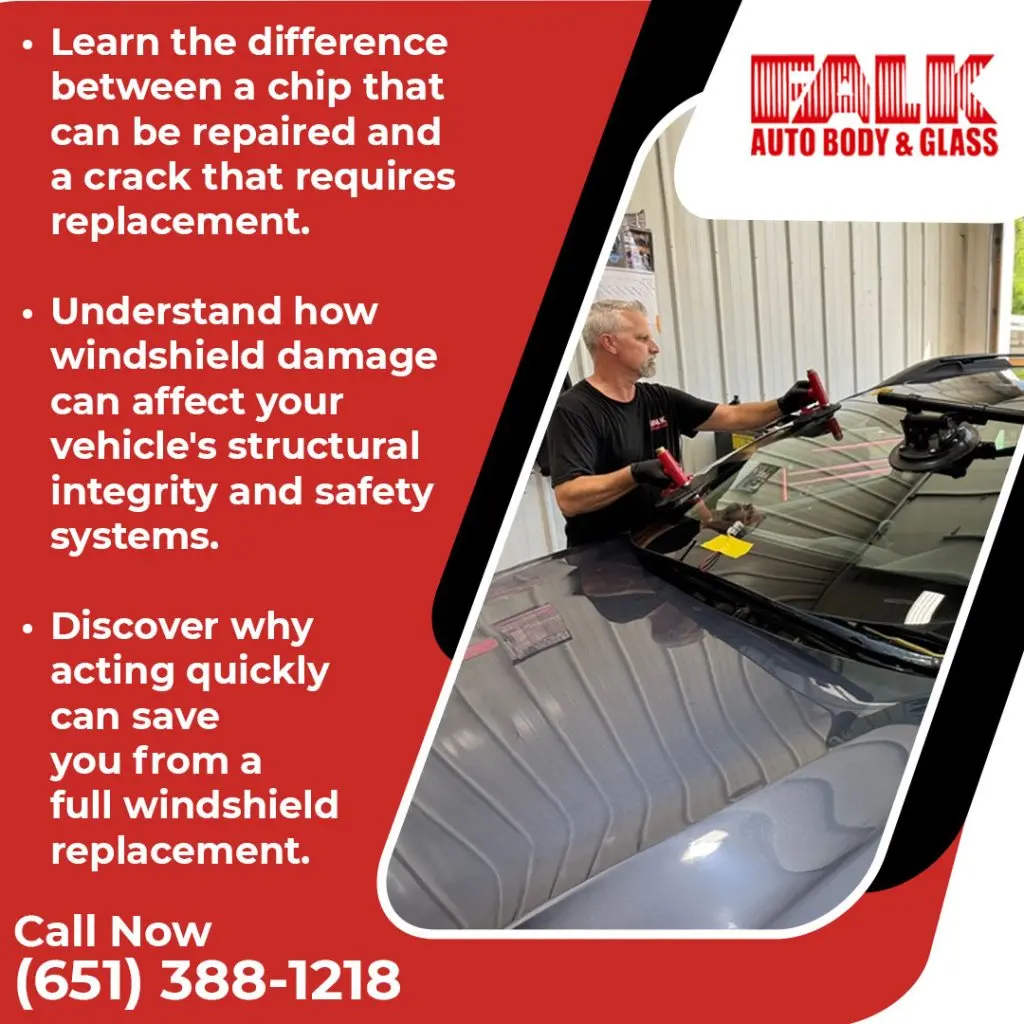
Red Wing Glass Repair Services: Making the Right Choice
The windshield protects you during every drive through structural support during accidents, proper airbag deployment, and clear vision of surrounding hazards. Damage to this safety component requires prompt evaluation and appropriate action from qualified professionals.
Size, location, and depth determine whether repair will succeed or replacement becomes necessary. Chips smaller than a quarter and cracks under three inches can often be repaired when they sit away from edges and outside your direct line of sight. Larger damage, edge cracks, or anything penetrating both glass layers needs replacement.
Temperature changes, road vibrations, and time itself work against damaged windshields. What repairs easily today may require replacement next week. When searching for the best auto glass repair near you, look for facilities that combine proper training, quality materials, and honest recommendations. Falk Auto Body and Glass provides all three for every windshield evaluation.
Contact Falk Auto Body and Glass at (651) 388-1218 or mike@falkautobody.com to schedule your windshield evaluation. We provide trusted auto glass repair in Red Wing and surrounding communities with the same commitment to quality and safety that our family business has maintained since 1958.