
A single rock chip smaller than a dime sits on your windshield after yesterday’s highway drive. You barely notice it. Within three days, a crack extends six inches across the glass. This progression happens frequently on Minnesota roads, where temperature swings, road debris, and severe weather create conditions where small damage escalates rapidly into safety hazards. Your vehicle’s glass performs multiple protective functions beyond providing visibility. Damaged glass compromises these safety features and affects Advanced Driver Assistance Systems (ADAS), which depend on cameras mounted to the windshield for proper operation.
Falk Auto Body and Glass, Inc, has served drivers throughout Red Wing and surrounding communities since 1958, providing expert glass repair services that prioritize safety and quality. The sooner you recognize damage indicators, the more likely repair will solve the problem without requiring full glass replacement.

Physical Damage Indicators
Chips and cracks require immediate attention when they appear, regardless of size. Even small damage creates weak points in the glass where stress concentrates during normal driving vibrations and temperature changes.
Chip Formations
Chips form when objects strike the windshield at high speed. Three common patterns indicate different levels of concern:
- Bullseye damage creates a circular impact crater with concentric rings radiating outward. These usually measure between one-quarter inch and one inch in diameter. The circular pattern indicates that the outer glass layer absorbed most of the impact force.
- Star breaks produce multiple crack lines extending from a central impact point. These cracks branch outward in four or more directions, resembling a starburst pattern. Star breaks indicate the impact penetrated deeper into the glass layers than simple bullseye damage.
- Combination breaks merge characteristics of both patterns, showing circular damage at the impact point with radiating cracks extending beyond the circle. This pattern suggests more severe damage requiring professional assessment for auto glass repair.
Crack Development
Cracks represent a more serious structural compromise than chips. Several crack types require different response approaches:
- Edge cracks start within two inches of the windshield perimeter and extend inward. These pose an immediate danger because the glass edges provide primary bonding strength between the windshield and vehicle frame. Edge damage spreads rapidly under normal driving stress.
- Floater cracks begin away from edges and spread in multiple directions across the glass center. These typically result from thermal stress or internal glass defects rather than external impacts. Floater cracks indicate the entire windshield structure has been compromised.
- Stress cracks appear without visible impact points. Temperature differentials between the glass interior and exterior surfaces create these cracks. Minnesota drivers encounter stress cracks frequently during seasonal transitions when daily temperature swings reach 40 degrees or more.
Surface Deterioration Warnings
Surface damage accumulates gradually over time but eventually compromises visibility and structural integrity. Three surface conditions indicate the need for professional glass repair services.
Pitting Accumulation
Pitting occurs when sand, gravel, and small debris impact the windshield at highway speeds. Each impact creates a tiny crater on the glass surface. Individual pits measure less than one millimeter but accumulate into patterns that scatter light.
Pitting becomes hazardous when it creates glare during sunrise, sunset, or nighttime driving. Oncoming headlights refract through the pitted surface, creating starburst patterns that obscure vision. Low-angle sunlight produces similar effects during morning and evening commutes.
Drivers who regularly travel gravel roads or follow trucks carrying loose materials face accelerated pitting. The tiny surface craters reduce contrast perception, making it difficult to distinguish objects against similarly colored backgrounds.
Hazy Appearance
Cloudiness or haze across the windshield surface indicates the outer protective coating has degraded. Modern windshields include coatings that repel water and resist scratches. Chemical exposure from car washes, road salt, and atmospheric pollutants gradually breaks down these protective layers.
Hazy glass reduces visibility during overcast conditions or fog when ambient light levels drop. This problem intensifies when combined with pitting, as both conditions work together to scatter and diffuse incoming light.
Discoloration Patterns
White, yellow, or rainbow-tinted areas appearing near damage points signal moisture infiltration between glass layers. Windshields use laminated construction with two glass layers bonded to a plastic interlayer. When damage allows moisture to reach this interlayer, the plastic begins separating from the glass.
Discoloration spreads outward from the initial damage point as more moisture enters. This delamination process weakens the windshield’s ability to remain intact when collisions occur. Once delamination begins, repair becomes impossible, and full replacement is required.
Functional Performance Problems
Observable functional issues often show underlying glass damage that may not be instantly visible. These problems require prompt evaluation from qualified professionals offering glass repair services.
Water Infiltration
Water entering the vehicle cabin around the windshield edges means the seal between the glass and frame has failed. This failure occurs through several mechanisms:
- Adhesive degradation happens when the urethane that bonds the windshield to the frame loses strength. Extreme temperature exposure, age, and improper initial installation cause adhesive failure. Signs include water dripping from the headliner during rain or car washes.
- Gasket deterioration affects older vehicles with rubber gasket seals rather than urethane bonds. The rubber hardens and cracks over time, creating gaps where water enters. Replacement gaskets restore the seal without requiring new glass in many cases.
Water infiltration creates secondary problems beyond dampness. Moisture promotes rust formation in the frame areas surrounding the windshield. Electrical systems beneath the dashboard face corrosion risk. Mold growth in carpeting and insulation creates health concerns and persistent odors.
Unusual Sounds
Whistling noises while driving indicate air passing through cracks or gaps in the windshield seal. The pitch and volume change with vehicle speed. These sounds often start subtle but become progressively louder as damage spreads.
Rattling sounds suggest the windshield has loosened from its mounting. Normal adhesive bonds prevent any movement between the glass and frame. Audible rattling means the bond has failed extensively, and the windshield poses an ejection risk during accidents.
Wiper Blade Issues
Windshield wipers that skip, judder, or catch on glass imperfections indicate surface damage. A healthy glass provides a smooth surface for wiper blades to glide across. Chips, cracks, or raised glass edges snag the rubber blade, causing irregular movement.
Blade problems may seem like a wiper replacement issue. However, when new blades exhibit the same behavior, glass damage is the likely cause. Running wipers across damaged glass accelerates both blade wear and glass deterioration.
Temperature-Related Warning Signs
Minnesota’s climate creates challenges for damaged windshields. Temperature extremes cause rapid damage progression that drivers need to recognize.
Frost Pattern Changes
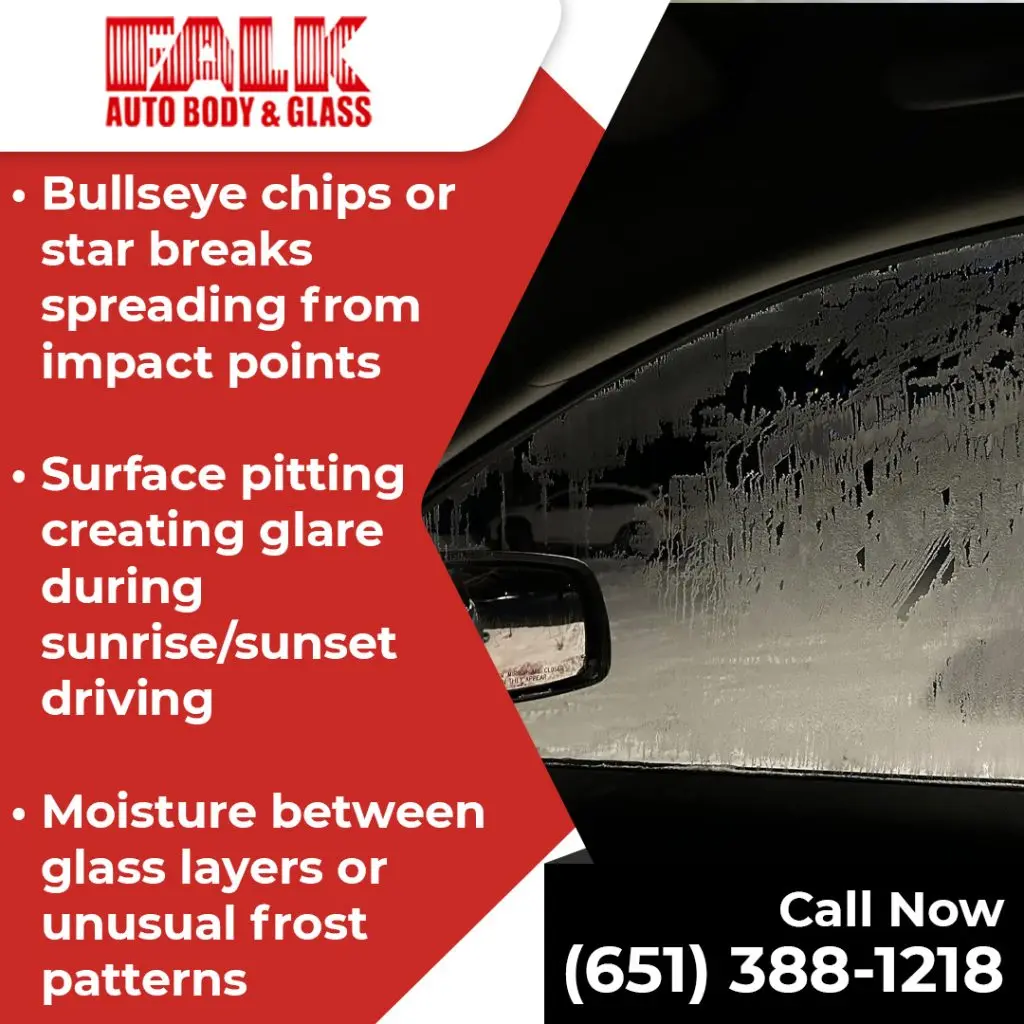
Unusual frost patterns appearing on the interior windshield surface indicate seal failure or glass delamination. Normal frost forms evenly across the entire surface. Frost concentrated in specific areas, especially near damage points, shows that moisture has penetrated between the glass layers.
This moisture freezes when temperatures drop, expanding with force that widens existing damage. Each freeze-thaw cycle progressively enlarges cracks and chips.
Rapid Crack Extension
Cracks that extend noticeably after temperature changes signal glass under extreme stress. A crack measuring two inches in the evening that extends to five inches by the next morning demonstrates how thermal cycling affects damaged glass.
Morning hours present the highest risk for thermal damage. The windshield’s exterior surface warms from sunlight while the interior remains cold. This temperature gradient creates internal stress that forces cracks to extend.
Defrosting Difficulties
Windshields that take unusually long to defrost or develop persistent fog patches during defrosting cycles may have internal damage. Healthy laminated glass conducts heat uniformly from defrosting systems. Delaminated areas or internal cracks disrupt heat distribution, creating cold spots that resist defrosting.
Advanced Safety System Indicators
Modern vehicles include electronics that depend on properly functioning glass. When damage appears near these systems, finding the best auto glass repair near you becomes important for proper diagnosis and correction.
ADAS Malfunction Warnings
Advanced Driver Assistance Systems use cameras mounted to the windshield behind the rearview mirror. These cameras monitor lane markings, detect vehicles ahead, and measure following distances for features like adaptive cruise control and automatic emergency braking.
Dashboard warning lights indicating ADAS system malfunctions may result from windshield damage rather than camera failure. Even small chips or cracks in the camera’s field of view can confuse the sensors, triggering error messages.
This connection between glass damage and system warnings often surprises vehicle owners who assume electronic malfunctions require complex diagnostics. The actual problem is untreated windshield damage that local auto glass repair near you can resolve.
Rain Sensor Problems
Rain-sensing wipers that activate unexpectedly or fail to respond to precipitation indicate a sensor malfunction. Rain sensors mount to the windshield’s interior surface and detect moisture through infrared light reflection. Cracks, chips, or delamination in the sensor area interfere with light transmission, causing erratic operation.
Time-Critical Damage Categories
Certain damage types require immediate professional evaluation regardless of size. Delaying assessment creates safety risks and guarantees more complex solutions.
Driver Vision Line Damage
Any chip, crack, or distortion within the driver’s direct line of sight calls for immediate attention. This area extends from the steering wheel centerline across the windshield area directly in front of the driver. State vehicle inspection standards fail windshields with damage in this zone because it impairs safe operation.
Even perfectly executed repairs leave slight optical distortion. When positioned where the driver’s eyes naturally focus, this distortion creates visual interference that some drivers find distracting.
Multiple Damage Points
Windshields with more than three chips or small cracks should receive immediate professional assessment. Multiple damage points indicate the glass has been severely compromised. Each damage site acts as a stress concentration point where further cracking can begin.
The resin used for repairs has different optical properties from glass. Multiple repairs create a patchwork appearance that reduces visibility and indicates the windshield has reached the end of its service life.
Active Spreading
Cracks that visibly extend during observation require emergency service. Active spreading indicates the glass is under such stress that normal driving vibrations, temperature changes, or minor impacts will cause rapid failure.
Drivers should avoid operating vehicles with actively spreading cracks. The windshield could suddenly shatter from road vibrations, creating a dangerous situation that compromises driver visibility and vehicle structural integrity.
Professional Assessment Value
Attempting to determine repairability through personal inspection often leads to incorrect conclusions. Trained technicians providing the best auto glass repair near you use specific evaluation criteria that differ from consumer observations.
Damage Depth Evaluation
Surface inspection cannot determine whether damage has penetrated through both glass layers. Technicians use specialized tools to assess depth and determine if moisture has reached the plastic interlayer between glass layers.
Depth matters because resin can only restore structural strength when the plastic interlayer remains intact. Once moisture penetrates this layer, delamination begins, and repair becomes impossible. This assessment requires professional equipment not available to vehicle owners.
Structural Integrity Testing
Professional evaluation includes checking the bond strength between the windshield and frame. Technicians inspect the urethane adhesive for separation, cracking, or deterioration that indicates seal failure. This inspection identifies problems not visible from casual observation.
Frame alignment around the windshield opening also receives evaluation. Vehicles with previous collision damage may have frame distortion that stresses the windshield unevenly. This stress accelerates damage progression and may require frame correction before glass replacement.
ADAS Calibration Requirements
Vehicles equipped with ADAS technology require recalibration after windshield replacement. Calibration restores proper alignment between cameras and sensors. The process uses specialized targets and diagnostic equipment to verify system accuracy.
Facilities that provide this service must invest in manufacturer-specific calibration equipment and training. Proper calibration prevents false warnings and maintains the safety systems your vehicle depends on for collision avoidance.
Professional Auto Glass Repair in Red Wing
Falk Auto Body & Glass has served Red Wing and surrounding communities for more than six decades by focusing on safety and honest recommendations. We evaluate every damaged windshield using manufacturer specifications and safety standards developed to protect vehicle occupants.
Manufacturer-Specified Procedures
At Falk Auto Body & Glass, we follow Original Equipment Manufacturer (OEM) procedures for both repairs and replacements. OEM procedures specify proper adhesive types, curing times, and installation techniques for each vehicle make and model. This commitment to manufacturer standards preserves your vehicle’s structural protection and warranty coverage.
Original Equipment Manufacturer glass comes from suppliers that produced your vehicle’s original windshield, meeting exact factory specifications. We discuss the differences between OEM and aftermarket glass options, helping you understand how each choice affects your vehicle’s safety systems and long-term performance.
Honest Damage Assessment
When the repair adequately addresses your damage, we recommend and perform repairs. When replacement provides better long-term safety, we explain why and discuss your options transparently. This approach builds trust by putting your safety ahead of revenue considerations.
At Falk Auto Body & Glass, we assess whether damage has penetrated both glass layers, check for moisture infiltration, and evaluate the location relative to ADAS cameras and rain sensors. These factors determine whether repair will succeed or replacement becomes necessary.
ADAS Calibration Capabilities
At Falk Auto Body & Glass, we maintain calibration equipment and follow manufacturer procedures to restore safety system accuracy after windshield replacement. This specialized capability positions us as a leading option for auto glass repair near you that completes both glass replacement and system calibration at one location.
Modern vehicles depend on properly calibrated systems for lane departure warnings, automatic emergency braking, and adaptive cruise control. Our investment in calibration equipment means your vehicle receives complete service that restores all safety features to proper operation.
Red Wing Glass Damage Solutions
Recognizing warning signs early preserves your ability to choose repair over replacement. Chips smaller than a quarter, cracks under six inches, and damage away from the windshield edges often qualify for successful repair when dealt with promptly. Larger damage, edge cracks, multiple damage points, and delamination require complete windshield replacement.
Minnesota’s temperature extremes, road maintenance practices, and rural character create conditions where glass damage occurs frequently and progresses quickly. These regional challenges make finding experienced auto glass repair near you important, as temperature-related damage spreads faster in our climate than in more temperate regions.
Don’t delay when you notice any warning signs discussed in this guide. Contact Falk Auto Body & Glass at (651) 388-1218 or mike@falkautobody.com to schedule your professional windshield evaluation. We serve drivers throughout Red Wing and surrounding communities with the same commitment to safety and quality workmanship that has defined our business since 1958.