Rear-end collisions range from low-speed parking lot impacts to high-speed highway crashes. Regardless of how the collision occurs, the damage to a vehicle’s rear structure is not always visible from the outside. Structural components, electronic sensors, and calibrated driver assistance features all absorb collision forces during impact and must be restored to factory specifications before the vehicle is safe to drive again.
Falk Auto Body and Glass, Inc. has been providing auto body repair in Red Wing since 1958. Over decades of collision work, we have seen how often rear-end damage is underestimated. What appears to be a cosmetic issue frequently involves structural displacement and sensor misalignment beneath the surface.
What Happens to a Vehicle During a Rear-End Collision
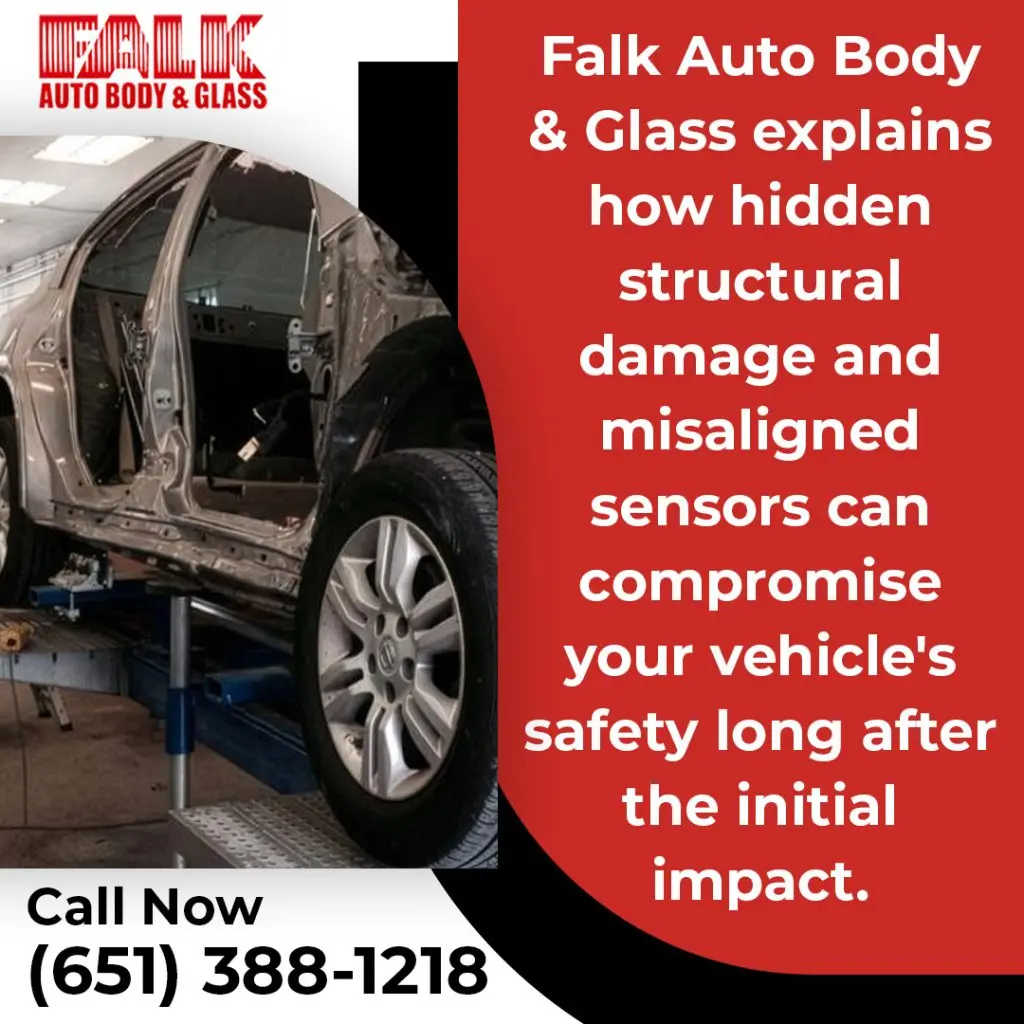
The rear structure of a vehicle is designed to absorb crash energy through controlled deformation of the bumper beam, energy absorbers, and mounting brackets.
The rear bumper assembly is not a decorative component. It is part of a crash management system. During an impact, the bumper beam compresses and transfers energy through the rear frame rails in a controlled sequence. When this sequence is disrupted by an improperly repaired component, the vehicle cannot manage crash energy the same way in a future collision.
Visible vs. Hidden Damage
Visible rear-end damage is easy to identify: dented trunk lids, cracked bumper covers, and broken taillights. Hidden damage requires disassembly and diagnostic scanning to detect. Hidden damage commonly includes:
- Bent or stress-fractured rear frame rails.
- Buckled trunk floor panels.
- Radar and sonar sensors embedded in the rear bumper that shifted out of position.
- Rear cameras mounted in the tailgate or trunk lid that were displaced by impact forces.
- Taillight housings cracked internally, even when the lens surface appears intact.
A visual inspection alone cannot detect most of these conditions. This is why pre-repair diagnostic scanning is required by most vehicle manufacturers’ procedures.
Rear-End Collision Effects on Vehicle Materials and Safety Systems
Materials Used in Rear Vehicle Structures
Modern rear vehicle structures use ultra-high-strength steel (UHSS), conventional steel, and aluminum. A qualified auto body repair service must identify each material and apply distinct repair techniques, tools, and temperature controls for each.
Ultra-high-strength steel (UHSS) resists deformation during a crash. Its protective properties are lost, however, if the steel is heated beyond a manufacturer-specified temperature during repair. That threshold varies by vehicle and steel grade.
Aluminum is used in outer panels on many current models. Working on aluminum requires its own dedicated toolset, kept entirely separate from the tools used on steel components. If steel tools contact aluminum during repair, galvanic corrosion begins beneath the painted surface. Galvanic corrosion is a chemical reaction between two dissimilar metals that develops invisibly and weakens structural integrity over time.
Identifying each material before repair begins is a technical requirement. Mixing repair techniques between materials produces a repair that appears correct on the surface while creating long-term structural risk.
ADAS Systems and Rear Sensor Recalibration
ADAS, or Advanced Driver Assistance Systems, are electronic safety features that rely on sensors positioned at specific locations throughout the vehicle’s exterior. Any repair that shifts a rear sensor affects how these systems perform.
Rear ADAS features in modern vehicles include:
- Rear automatic emergency braking, which detects obstacles while reversing
- Blind spot monitoring (BSM), which tracks vehicles in adjacent traffic lanes
- Rear cross-traffic alert (RCTA), which detects approaching vehicles at low speeds when backing out
- Parking sensors, which use sonar to measure distance from objects behind the vehicle
- Rear backup cameras, which provide a direct view of the area behind the vehicle
These systems use radar, sonar, and camera sensors embedded in the rear bumper, rear glass, and body panels. A collision that moves any of these sensors, even by a few millimeters, affects the data they report to the vehicle’s safety control modules.
There is no dashboard warning that alerts a driver to a miscalibrated sensor. The system continues to appear operational while providing inaccurate data. That gap between appearance and actual function only becomes visible when a safety feature fails to perform as expected. This is why recalibration is not a secondary consideration. Any repair that disturbs the position of an ADAS sensor requires recalibration before the vehicle is safe to return to normal use. Not every shop performs this step as standard practice, which is why ADAS recalibration should be a direct question when evaluating auto body repair near you.
The Repair Process
Proper rear-end collision repair follows a documented sequence. The repair sequence is progressive; each phase must be completed correctly before the next one begins. Skipping any step produces a vehicle that may look restored but carries unresolved safety deficiencies.
Pre-Repair Diagnostic Scanning
A pre-repair diagnostic scan identifies all electronic systems affected by the collision before any physical work begins. Modern vehicles store fault codes in their computer networks after an impact, including in systems that show no outward damage. A rear collision affecting the bumper assembly can generate fault codes in the airbag control module, ADAS control module, and body control module simultaneously. The scan captures this data and establishes a documented baseline before repairs start.
Disassembly and Full Damage Assessment
Technicians remove damaged exterior components to inspect the underlying structure directly. A crushed bumper cover can conceal a bent rear bumper beam, fractured energy absorbers, and radar sensors pushed out of alignment. A dented trunk lid may reveal buckled trunk floor panels and misaligned hinges when removed. The assessment determines which structural components can be repaired and which must be replaced, guided by the manufacturer’s published repair procedures for that specific vehicle.
Structural Repair Per Manufacturer Procedures
Each repair step follows the documented procedure for the specific year, make, and model being serviced. OEM, or Original Equipment Manufacturer, repair procedures specify the exact welding techniques, temperature limits, adhesive types, torque values, and replacement requirements for each component. These procedures are model-specific and updated regularly as manufacturers revise designs and materials.
A procedure for a 2021 vehicle may differ from the procedure for a 2024 version of the same model. Auto body repair shops that rely on outdated printed manuals rather than current manufacturer databases risk applying procedures that no longer reflect the vehicle’s actual repair requirements.
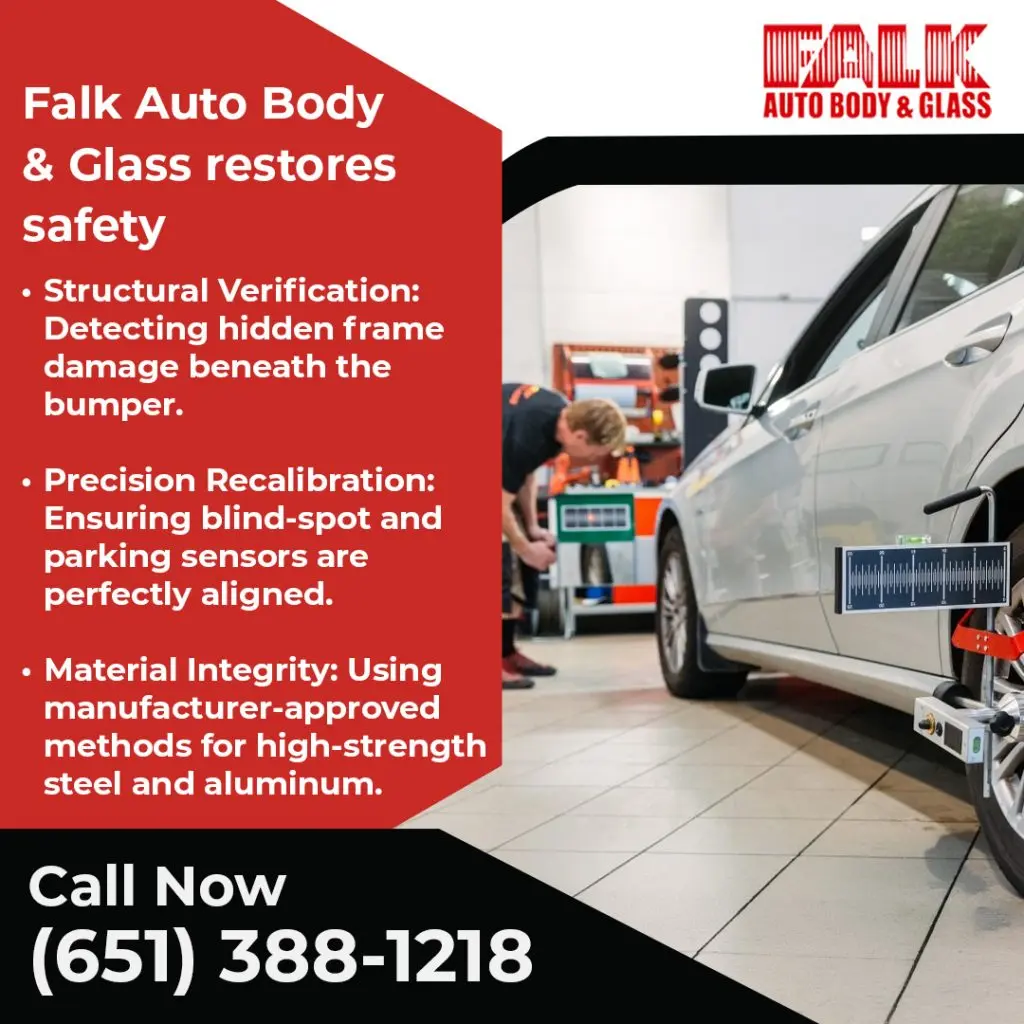
Computerized frame measuring systems verify rear frame geometry at multiple reference points throughout the repair. Alignment is confirmed within manufacturer tolerances.
Panel Repair and Replacement
Exterior panels are repaired or replaced after structural work is verified. This includes quarter panels, trunk lids, bumper fascias, and adjacent components affected by the impact.
Correct panel alignment serves two purposes: restoring the vehicle’s appearance and confirming that the underlying structural work was completed properly. Panel gaps that remain uneven after repair can indicate unresolved structural issues beneath the surface.
ADAS Recalibration
Any rear-end repair affecting bumper assemblies, rear glass, or body panels housing sensors requires ADAS recalibration using manufacturer-specific equipment. Calibration takes two forms:
- Static calibration is performed inside the auto body repair shop. The vehicle is positioned on a level surface, and specialized targets are placed at manufacturer-specified distances and angles for each sensor type.
- Dynamic calibration requires a test drive under defined conditions, allowing the sensors to re-establish accurate detection data as the vehicle moves through real-world traffic.
Many vehicles require both static and dynamic calibration after a rear-end repair. Completing only one step leaves certain safety systems operating on data that does not reflect their corrected position.
Post-Repair Scanning and Documentation
A post-repair diagnostic scan confirms all electronic systems communicate correctly and no fault codes remain. Documentation provided at the completion of repair should include pre-repair and post-repair scan reports, ADAS calibration certificates, and repair photographs. This record confirms the work was performed to manufacturer standards and provides a reference if any questions arise after the vehicle is returned.
Frequently Asked Questions
Is It Safe to Drive After a Minor Rear-End Collision?
Not always. A rear-end collision that appears minor on the surface can still affect structural components, sensor positions, and safety systems that are not visible during a casual inspection. Driving the vehicle before a proper assessment risks operating a car with compromised crash protection or malfunctioning ADAS features without any dashboard indication that something is wrong.
The safest step after any rear-end collision is to have the vehicle inspected by a qualified auto body repair shop before returning it to regular use.
How Do I Choose the Right Auto Body Repair Shop After a Rear-End Collision?
Look for documented certifications, manufacturer approvals, and a shop that performs pre- and post-repair diagnostic scanning as standard practice.
When evaluating shops, ask whether the facility accesses OEM repair procedures specific to your vehicle, performs ADAS recalibration using manufacturer-specific equipment, and provides written documentation at the completion of every repair. A shop that meets these standards will answer each question directly and back it up with records.
I-CAR Gold Class certification and manufacturer approvals from brands are reliable indicators that a shop maintains current training and equipment standards. For drivers in southeastern Minnesota, Falk Auto Body & Glass provides auto body repair in Red Wing and nearby communities with all of these standards in place.
Can Rear-End Collision Damage Affect My Vehicle’s Resale Value?
Rear-end collision damage that is not properly repaired and documented can reduce a vehicle’s resale value. Buyers and dealerships use vehicle history reports to check for past collision claims. A repair performed without proper documentation, or one that left structural or sensor issues unresolved, can lower the vehicle’s appraised value and make it harder to sell.
A properly documented repair, including scan reports, calibration certificates, and repair photographs completed by a certified auto body repair service, provides a verifiable record that the vehicle was restored to manufacturer specifications. This protects resale value more effectively than a repair that only addresses visible damage.
What Is the Difference Between OEM and Aftermarket Parts in Collision Repair?
OEM parts are made by the vehicle’s original manufacturer and meet the exact specifications the vehicle was built to. Aftermarket parts are produced by third-party manufacturers and may not match those specifications.
In rear-end collision repair, this distinction matters for structural and safety components. Rear bumper beams, energy absorbers, and sensor mounting brackets all play a role in crash energy management. For example, an OEM bumper beam is engineered to compress at a specific rate during impact to trigger airbag deployment at the correct moment. An aftermarket part may not replicate that performance.
When searching for auto body repair near you, ask whether the shop uses OEM parts for structural and safety-related components, and whether their repair process follows manufacturer-documented procedures for your specific vehicle.
Does a Rear-End Collision Always Require a Police Report?
Requirements vary by state, but filing a report is generally advisable regardless of the severity of the impact.
In Minnesota, a crash report is required when a collision results in injury, death, or property damage exceeding a specified threshold. Even when a report is not legally required, having an official record of the incident supports insurance claims and provides documentation if additional damage is discovered during the repair process.
After filing any necessary report, contact your insurance carrier and bring the vehicle to a qualified shop for a full inspection before driving it further.
What Falk Auto Body & Glass Brings to Every Repair
Falk Auto Body & Glass provides auto body repair in Red Wing and nearby areas of southeastern Minnesota. Every vehicle is repaired according to the manufacturer’s documented procedures for that specific make, model, and year.
Our facility holds I-CAR Gold Class certification and manufacturer approvals from GM, Hyundai, and Chrysler. We maintain current access to manufacturer repair procedure databases and apply updated procedures as they are revised.
For rear-end collision repairs, our capabilities include:
- Pre-repair and post-repair diagnostic scanning on every vehicle
- Computerized frame measuring systems for structural alignment verification
- ADAS calibration using manufacturer-specific equipment and targets
- A dedicated aluminum repair area with separate tools to prevent cross-contamination
- Direct communication with insurance carriers to document required repair procedures
Our team provides clear explanations of the repair process, detailed estimates, and complete documentation at the completion of every job.
Schedule Your Rear-End Collision Repair in Red Wing
A rear-end collision affects more than the visible damage on your vehicle. Structural components, safety sensors, and driver assistance systems all need to be properly assessed and restored before the vehicle is safe to drive again.
Drivers trust Falk Auto Body & Glass because every repair is performed to the standard the manufacturer intended. Every vehicle that comes through our doors receives a full diagnostic assessment, manufacturer-guided repairs, and complete documentation before it leaves our facility.
Call us at (651) 388-1218 or email mike@falkautobody.com to discuss your vehicle and schedule an inspection. Experience auto body repair near you that meets the standard your vehicle was built to, every repair and every time, at Falk Auto Body & Glass.